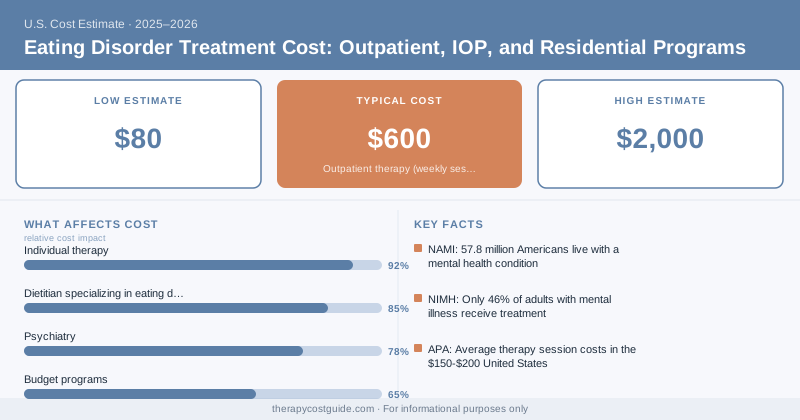
Eating Disorder Treatment Cost: Outpatient, IOP, and Residential Programs
{ if eq .Lang "zh" }{ else }{ end }Residential eating disorder treatment — the level that provides 24/7 medical supervision in a specialized facility — runs $30,000 to $100,000 per month. Most families don’t have that. Most insurance plans cover less than they should. And eating disorders have the second highest mortality rate of any mental health condition.
That cost-access gap is the defining challenge of eating disorder care in the United States. Here’s the full picture, including what each level of care actually costs, what insurance covers, and what your real options are.
According to NEDA (National Eating Disorders Association), eating disorders affect 28.8 million Americans at some point in their lifetime. Despite this prevalence and severity, fewer than 1 in 3 people with an eating disorder receive treatment — with cost being the primary reported barrier.
Levels of Eating Disorder Care
Eating disorder treatment happens across a spectrum of care intensity, each with dramatically different costs:
| Level of Care | Monthly Cost (Self-Pay) | With Insurance |
|---|---|---|
| Outpatient therapy (weekly sessions) | $600–$2,000 | $80–$600 |
| Intensive outpatient (IOP, 9–15 hrs/wk) | $3,000–$8,000 | $500–$2,000 |
| Partial hospitalization (PHP, 20–30 hrs/wk) | $8,000–$20,000 | $1,000–$4,000 |
| Residential treatment (24/7 care) | $30,000–$100,000 | $3,000–$15,000 |
| Medical inpatient (acute stabilization) | $10,000–$40,000 | $2,000–$8,000 |
Outpatient Treatment: The Starting Point
For mild-to-moderate eating disorders without medical complications, outpatient treatment typically includes:
- Individual therapy (CBT, FBT, or DBT-informed): $150–$300/session, weekly = $600–$1,200/month
- Dietitian specializing in eating disorders: $100–$250/session, biweekly = $200–$500/month
- Psychiatry if medication management needed: $150–$350/visit, monthly = $150–$350/month
Full outpatient treatment: $950–$2,050/month at self-pay rates.
With in-network insurance, expect $200–$600/month in copays.
Intensive Outpatient Programs (IOP)
IOP programs run 3–5 days per week, 3–5 hours per day, and include group therapy, meals with dietitian supervision, and weekly individual sessions.
Self-pay cost: $600–$2,000 per day, or $3,000–$10,000 per week. Most IOP stays last 4–8 weeks: $12,000–$80,000 total.
With insurance, IOP is typically covered if medically necessary. Expect $1,000–$3,000/month in copays after authorization.
Residential Treatment: The Full Cost
Residential eating disorder treatment is exactly as expensive as it sounds. Programs like Renfrew, Eating Recovery Center, Center for Discovery, and similar facilities cost:
- Budget programs: $1,000–$1,500/day
- Mid-tier programs: $1,500–$2,500/day
- Premium programs: $2,500–$3,500+/day
At 30 days, that’s $30,000–$100,000 per admission. Insurance coverage for residential eating disorder treatment has improved but remains inconsistent — many plans require frequent utilization review and may discharge patients before clinicians believe it’s appropriate.
Insurance Denials for Eating Disorder Treatment: A Specific Problem
Insurance companies frequently deny or cut short eating disorder treatment based on weight criteria — a practice that’s both medically inappropriate and increasingly legally prohibited.
The FREED Act and various state laws mandate that insurance companies cannot deny treatment based solely on weight or BMI. If your insurer denies residential or IOP coverage, appeal — and cite mental health parity. The Alliance for Eating Disorders Advocacy (thealliance.org) provides free insurance advocacy support.
NEDA’s research shows that early, intensive treatment produces better outcomes than delayed care. Fighting an insurance denial is worth it.
Medication for Eating Disorders
Medication is adjunctive for most eating disorders — it helps with comorbid symptoms but doesn’t treat the eating disorder directly.
Fluoxetine (Prozac): The only FDA-approved medication for bulimia nervosa. Generic: $10–$20/month.
For anorexia nervosa: No medication is FDA-approved for AN directly; olanzapine is sometimes used for severe restriction and anxiety.
Vyvanse (lisdexamfetamine): FDA-approved for binge eating disorder. Generic became available in 2023; costs $150–$300/month brand, $50–$100/month generic.
Financial Assistance for Eating Disorder Treatment
Eating Disorder Hope’s scholarship database (eatingdisorderhope.com) lists programs offering reduced-fee residential care.
NEDA Helpline (1-800-931-2237): Can assist with insurance appeals and finding lower-cost programs.
Project HEAL (theprojectheal.org): Provides insurance navigation support and treatment scholarships.
University programs: Some university clinical programs offer eating disorder treatment at reduced cost for research participants.
Disclaimer: TherapyCostGuide provides cost information for educational purposes only. We are not a mental health provider and do not offer clinical advice or treatment. Cost ranges are based on national survey data and vary significantly by location, provider credentials, practice setting, and insurance plan. Always consult a licensed mental health professional for treatment decisions. If you are in crisis, call or text 988 (Suicide & Crisis Lifeline) or go to your nearest emergency room.