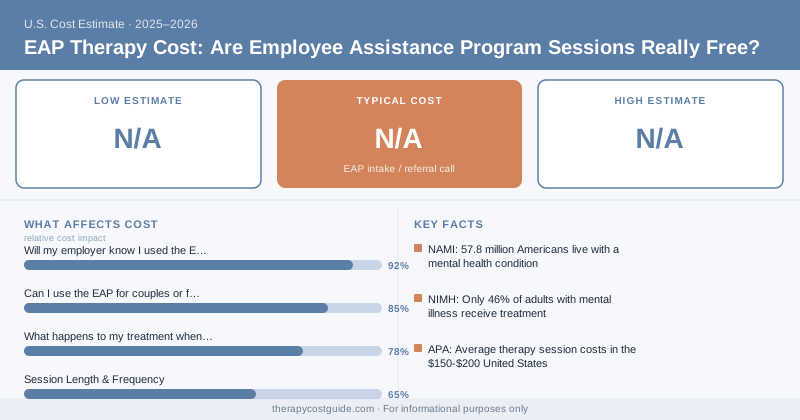
EAP Therapy Cost: Are Employee Assistance Program Sessions Really Free?
{ if eq .Lang "zh" }{ else }{ end }Free therapy through your job actually exists, and most people never use it. If your employer offers an Employee Assistance Program (EAP), you probably have a handful of counseling sessions sitting there at $0 out of pocket — and a lot of workers don’t even know it.
The catch is that “free” comes with limits. EAP therapy is short-term by design, and once you understand exactly what it covers, you can squeeze real value out of it before deciding what comes next.
What an EAP Actually Gives You
An EAP is a benefit your employer pays for that connects you to short-term counseling, plus help with legal questions, financial stress, childcare referrals, and more. The mental health piece typically includes a set number of free sessions per “issue” or per year.
Those sessions cost you nothing. No copay, no deductible, no claim. Your employer foots the bill, and your usage is confidential — your boss doesn’t get a list of who called.
Key Takeaway
EAP counseling is free to you — typically 3 to 8 sessions per issue, per year, paid by your employer. It’s designed for short-term, solution-focused help, not long-term therapy. When the free sessions run out, you transition to your regular health insurance or self-pay. Usage is confidential from your employer.What It Costs
| Item | Cost to You |
|---|---|
| EAP intake / referral call | $0 |
| Counseling sessions (within your allotment) | $0 |
| Sessions beyond your allotment | Switch to insurance copay or self-pay |
| Typical session allotment | 3–8 per issue, per year |
| After EAP: in-network copay | $20–$60 |
| After EAP: self-pay | $100–$200 |
The session count varies a lot by employer. Some offer three, some eight, a few generous ones offer more. Call your EAP line — usually printed on your benefits portal or HR intranet — and ask how many sessions you get and whether it resets annually.
How to Use One Well
EAP therapy shines for specific, time-limited problems: a rough patch, work stress, grief, a relationship crisis, a sleep spiral. It’s less suited to deep, long-term work.
Smart move: use your EAP sessions to get evaluated and stabilized, and ask that counselor for a referral to an ongoing therapist if you need more. Some EAP providers will also help you find an in-network therapist for the long haul.
How Common Are EAPs?
EAPs are widespread, especially at larger employers. KFF’s Employer Health Benefits research has consistently shown that the large majority of big firms offer an EAP, even though employee awareness and use stay low. SAMHSA has long promoted EAPs as a frontline tool for getting workers into care early, before problems escalate.
Yet a 2023 KFF tracking poll found cost was the leading barrier to mental health care — which makes free EAP sessions a strangely underused resource. If you’ve got one, it’s the cheapest therapy you’ll ever access.
When your free sessions run out, your next-cheapest options are your employer mental health benefits through insurance, then sliding scale therapy or free and low-cost therapy options. For the full coverage picture, see does insurance cover therapy.
Frequently Asked Questions
Will my employer know I used the EAP? No. EAP usage is confidential. Your employer pays for the program and may see aggregate, anonymized usage data, but not who called or why. The provider can’t share your individual information without consent.
Can I use the EAP for couples or family counseling? Often yes. Many EAPs cover relationship, family, and parenting sessions within the same allotment — one of the few free routes to couples work, since regular insurance usually won’t cover it. Confirm with your EAP line.
What happens to my treatment when the free sessions end? You transition to your health insurance or self-pay. Ideally your EAP counselor refers you to an ongoing in-network therapist before you run out, so there’s no gap in care. Ask about this at your first session.
{ if eq .Lang "zh" }Disclaimer: TherapyCostGuide provides cost information for educational purposes only. We are not a mental health provider and do not offer clinical advice or treatment. Cost ranges are based on national survey data and vary significantly by location, provider credentials, practice setting, and insurance plan. Always consult a licensed mental health professional for treatment decisions. If you are in crisis, call or text 988 (Suicide & Crisis Lifeline) or go to your nearest emergency room.