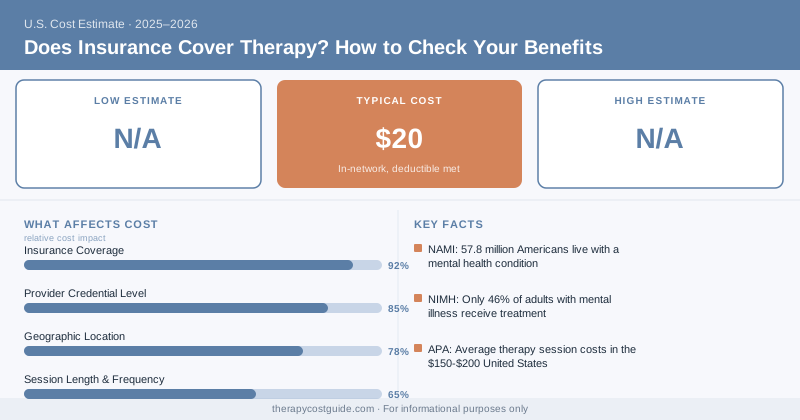
Does Insurance Cover Therapy? How to Check Your Benefits
{ if eq .Lang "zh" }{ else }{ end }Short answer: probably, yes. Most health plans in the US cover therapy. The catch is that “covered” doesn’t mean “free,” and it doesn’t mean every therapist in your town will take your card. So before you book a single session, you want to know two numbers — your copay and your deductible — and one fact: whether your therapist is in-network.
Here’s how to find all three in about fifteen minutes.
Why Most Plans Cover Therapy at All
Thank the Mental Health Parity and Addiction Equity Act of 2008, plus the Affordable Care Act. Marketplace plans and most employer plans are required to treat mental health benefits on par with medical ones. The Department of Labor strengthened those rules again in 2024.
That’s the law. But coverage varies a lot in practice, and the only way to know your numbers is to check. According to the APA’s 2023 practitioner survey, demand for therapy kept rising while in-network availability stayed tight — which means confirming coverage before you book matters more than ever.
The 15-Minute Benefits Check
Call the member services number on the back of your insurance card and ask these exact questions:
- “Do I have outpatient mental health benefits?”
- “What’s my copay or coinsurance for an in-network therapy session?”
- “Do I have a deductible, and have I met it yet this year?”
- “Do I need a referral or prior authorization to start therapy?”
- “Do I have out-of-network benefits, and what’s the reimbursement rate?”
Write down the reference number for the call. If a claim gets denied later, that reference number is gold.
Decode These Three Terms First
Copay — a flat fee per visit (e.g., $30 a session). Predictable.
Coinsurance — a percentage you pay (e.g., 20%) after your deductible. Less predictable.
Deductible — what you pay out of pocket before insurance kicks in. If you have a $2,000 deductible and haven’t touched it, you may pay the full negotiated rate per session until you hit it. After that, your copay applies.
What You’ll Actually Pay
| Scenario | Typical Cost Per Session | Notes |
|---|---|---|
| In-network, deductible met | $20 – $60 copay | The best case |
| In-network, deductible NOT met | $80 – $150 | Negotiated rate until deductible hit |
| Out-of-network with OON benefits | $90 – $200, then 50–70% reimbursed | You pay up front, get money back |
| Out-of-network, no OON benefits | $100 – $250 full price | You pay everything |
| No mental health coverage | $100 – $250 | Rare, but check |
If you find your plan’s numbers are rough, our guide to therapy without insurance breaks down cash-pay strategies.
How to Confirm a Therapist Is In-Network
Don’t trust the online directory alone — insurer directories are notoriously out of date. Do both of these:
- Search your insurer’s provider directory for the therapist’s name
- Then call the therapist’s office and ask, “Are you in-network with [my exact plan name]?”
Plan names matter. “Blue Cross” isn’t enough — you need the specific plan (e.g., “Anthem Blue Cross PPO 250”). A therapist can be in-network for one BCBS plan and out for another.
Frequently Asked Questions
Does insurance cover online therapy? Live video sessions with a licensed, in-network therapist are usually covered the same as in-person visits. Subscription apps like BetterHelp typically aren’t, because they don’t bill insurance. See our online vs. in-person cost comparison for the math.
Does insurance cover couples or marriage counseling? Usually not. Insurance pays for treating a diagnosed condition in one person, and “relationship problems” isn’t a billable diagnosis on its own. Some sessions get covered if one partner has a qualifying diagnosis and the therapy treats it.
What if no in-network therapist has openings? That’s common. Ask your insurer about a “network adequacy” exception — if they can’t find you an in-network provider within a reasonable distance and time, they may have to cover an out-of-network one at in-network rates.
Will my employer see that I’m in therapy? No. Your diagnosis and session notes are protected health information. Your employer sees that you have a health plan, not what you use it for.
Does Medicaid or Medicare cover therapy? Yes, both do, with their own rules. We cover the specifics in Medicaid therapy coverage and Medicare therapy coverage.
How many therapy sessions does insurance cover per year? Under parity rules, plans can’t set arbitrary session caps on mental health that don’t also apply to medical care. In practice, you’re covered as long as therapy is “medically necessary” — though some plans review longer treatment after a certain point.
My claim got denied. Now what? Appeal it. Start with an internal appeal, then request an external review. Mental health denials get overturned more often than people expect — don’t treat the first “no” as final.
{ if eq .Lang "zh" }Disclaimer: TherapyCostGuide provides cost information for educational purposes only. We are not a mental health provider and do not offer clinical advice or treatment. Cost ranges are based on national survey data and vary significantly by location, provider credentials, practice setting, and insurance plan. Always consult a licensed mental health professional for treatment decisions. If you are in crisis, call or text 988 (Suicide & Crisis Lifeline) or go to your nearest emergency room.