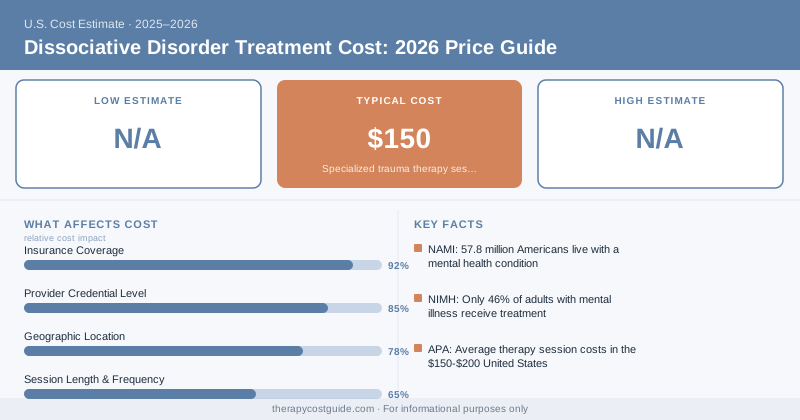
Dissociative Disorder Treatment Cost: 2026 Price Guide
{ if eq .Lang "zh" }{ else }{ end }What does it cost to treat a condition that often takes years to even diagnose correctly? That’s the honest starting question for dissociative disorders — including dissociative identity disorder, depersonalization-derealization disorder, and dissociative amnesia. People frequently see multiple providers over many years before getting the right diagnosis, and every one of those years has a price tag.
Once treatment is on track, though, the costs become a lot more predictable. Here’s the picture.
What Dissociative Disorder Treatment Costs
Treatment is overwhelmingly therapy-driven and long-term. There’s no medication that treats dissociation itself, though meds help co-occurring symptoms.
| Service | Typical Cost | Notes |
|---|---|---|
| Specialized trauma therapy session | $150 – $300 | Often weekly, sometimes twice weekly |
| First year of treatment | $7,000 – $20,000+ | Reflects frequency and duration |
| Psychiatry/medication management | $150 – $400 initial | For co-occurring depression/anxiety |
| EMDR session | $150 – $300 | Used carefully, phased |
| Intensive outpatient program | $350 – $800/day | For severe cases |
The wide range mostly reflects session frequency and how long care continues — this is one of the longer treatment commitments in mental health.
Why It’s a Long-Term Cost
Dissociative disorders are almost always rooted in trauma, so treatment is phased and patient: first stabilization and safety, then processing trauma, then integration. That structure means therapy often runs for one to several years, frequently weekly.
The National Alliance on Mental Illness notes that dissociative disorders affect about 2% of the population, yet they’re widely underdiagnosed and misdiagnosed — which is part of why people accumulate years of ineffective treatment before finding specialized care. Many providers draw on EMDR and other trauma-focused methods, but pacing is everything here.
Key Takeaway
Plan for the long haul: specialized trauma therapy at $150–$300 a session, often weekly for a year or more. The biggest hidden cost is the years of misdiagnosis before finding a clinician trained in dissociation.Finding the Right (and Right-Priced) Provider
Not every therapist is trained to treat dissociative disorders. Specialists tend to charge at the higher end — $200–$300 a session — but seeing the wrong provider for years is far more expensive than paying for the right one now. Because dissociation so often coexists with depression and anxiety, a skilled clinician treats the whole picture.
Medication and Insurance
There’s no drug for dissociation itself, but SSRIs or other medications often manage co-occurring depression, anxiety, or PTSD symptoms. That adds psychiatry visits to the budget. Insurance usually covers this care under mental health benefits — our does insurance cover therapy guide explains coverage. Without insurance, long-term care gets expensive fast, so review therapy without insurance options like training clinics and sliding-scale specialists.
Frequently Asked Questions
Why does treatment take so long? Dissociative disorders develop as a response to chronic trauma, and unwinding that safely can’t be rushed. Treatment follows a phased model — building safety and coping skills before processing trauma — which naturally extends over months to years. Trying to shortcut the process often makes symptoms worse.
Is there a medication that treats dissociation? No medication treats dissociation directly. Prescriptions are used to manage related symptoms like depression, anxiety, or sleep problems. Because of that, therapy is the central treatment and the central cost, with medication playing a supporting role.
How can I lower the cost of long-term treatment? Look for clinicians who supervise advanced trainees at reduced rates, university training clinics with trauma specializations, and providers who’ll set a sustainable schedule. Confirm your insurance’s annual mental health benefits up front so a multi-year plan doesn’t catch you off guard financially.
{ if eq .Lang "zh" }Disclaimer: TherapyCostGuide provides cost information for educational purposes only. We are not a mental health provider and do not offer clinical advice or treatment. Cost ranges are based on national survey data and vary significantly by location, provider credentials, practice setting, and insurance plan. Always consult a licensed mental health professional for treatment decisions. If you are in crisis, call or text 988 (Suicide & Crisis Lifeline) or go to your nearest emergency room.