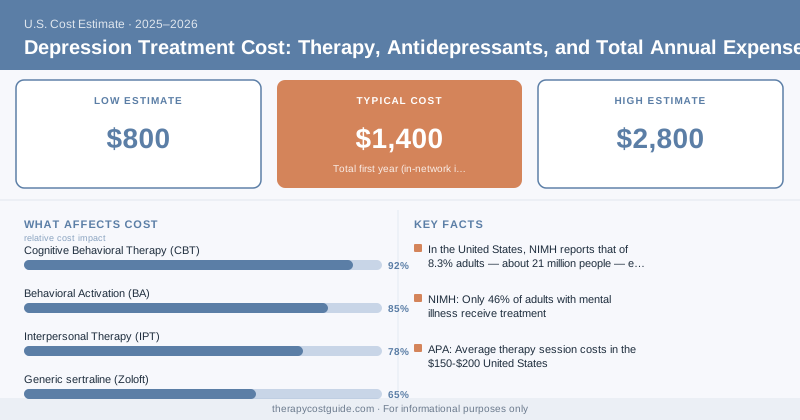
Depression Treatment Cost: Therapy, Antidepressants, and Total Annual Expenses
{ if eq .Lang "zh" }{ else }{ end }Depression is the leading cause of disability worldwide. In the United States, NIMH reports that 8.3% of adults — about 21 million people — experienced a major depressive episode in 2023. Only about 61% of them received any treatment. Cost is a major reason why.
Here’s a realistic look at what depression treatment actually costs in 2025–2026.
Treatment Options and Their Costs
Effective depression treatment usually involves therapy, medication, or both. The evidence is clear: combined therapy + medication produces better outcomes than either alone for moderate-to-severe depression.
| Treatment Component | Low Estimate | Typical | High Estimate |
|---|---|---|---|
| Therapy (20 sessions × $120/session) | $1,200 | $2,400 | $6,000 |
| Generic antidepressant (monthly) | $10 | $25 | $50 |
| Psychiatrist initial eval | $300 | $450 | $600 |
| Psychiatry follow-ups (×4/year) | $400 | $700 | $1,400 |
| Total first year (self-pay) | $2,400 | $4,200 | $9,200 |
| Total first year (in-network insurance) | $800 | $1,400 | $2,800 |
Therapy for Depression
The most studied therapy approaches for depression are:
Cognitive Behavioral Therapy (CBT): Typically 16–20 sessions. Evidence-based, time-limited. At $150/session, a standard CBT course runs $2,400–$3,000.
Behavioral Activation (BA): A component of CBT often used for depression specifically. Can be delivered in as few as 8–12 sessions for mild depression.
Interpersonal Therapy (IPT): 12–16 sessions. Focuses on relationship patterns and life transitions that contribute to depression. Similar efficacy to CBT for depression.
For mild depression, 12–16 sessions is often sufficient. For major depression or depression with a history of recurrence, longer treatment (20–40 sessions) is more common. Maintenance therapy (monthly sessions after remission) reduces recurrence rates significantly.
Antidepressant Costs
Generic antidepressants are among the most cost-effective medications in psychiatry:
- Generic sertraline (Zoloft): $10–$25/month
- Generic fluoxetine (Prozac): $10–$20/month
- Generic escitalopram (Lexapro): $15–$30/month
- Generic bupropion (Wellbutrin): $15–$35/month
- Generic venlafaxine (Effexor XR): $15–$45/month
Most people try 1–2 antidepressants before finding the right fit. That means 2–3 prescriber follow-ups at $150–$300 each while adjusting medications.
Brand-name antidepressants without generic equivalents (Trintellix, Fetzima) run $300–$600/month without insurance — meaningfully different from generics.
The Real First-Year Depression Treatment Timeline
What a typical first-year treatment experience looks like:
Month 1: Psychiatry initial evaluation ($350–$500) + first prescription. Possible week-long adjustment period.
Months 2–3: Psychiatry follow-up to check on side effects/response ($150–$250 each). Therapy begins.
Months 3–9: Weekly or biweekly therapy sessions. At biweekly, 26 weeks = 13 sessions at $150 = $1,950.
Months 9–12: Therapy transitions to monthly maintenance. Medication continues. 1–2 more psychiatry follow-ups.
Total first-year self-pay estimate: $3,500–$5,500 for combined therapy + medication.
What Happens If the First Treatment Doesn’t Work
About 30–40% of people with major depression don’t respond adequately to their first antidepressant trial. This is called treatment-resistant depression (TRD). When that happens, costs can increase significantly:
Augmentation strategies (adding a second medication):
- Aripiprazole (Abilify) add-on: generic $20–$60/month; brand $600–$900/month
- Lithium: generic $30–$70/month
- Additional prescriber visits: $150–$300 each
More intensive therapies if first-line fails:
- Ketamine infusions: $400–$800 per infusion, 6-infusion series = $2,400–$4,800
- Spravato (esketamine nasal spray): $800–$1,000 per administration; most insurance requires prior auth
- TMS (transcranial magnetic stimulation): $6,000–$12,000 for a full course; often covered by insurance after two antidepressant failures
Insurance Reality Check
With in-network insurance, the major costs become manageable:
- Therapy sessions: $20–$60 copay each
- Generic antidepressants: $0–$10/month (Tier 1)
- Psychiatry follow-ups: $30–$60 copay
The catch: finding in-network psychiatrists and therapists with openings. The supply problem is real. But for people who can access in-network care, the annual out-of-pocket for depression treatment is often $800–$2,000 rather than $4,000–$8,000.
Disclaimer: TherapyCostGuide provides cost information for educational purposes only. We are not a mental health provider and do not offer clinical advice or treatment. Cost ranges are based on national survey data and vary significantly by location, provider credentials, practice setting, and insurance plan. Always consult a licensed mental health professional for treatment decisions. If you are in crisis, call or text 988 (Suicide & Crisis Lifeline) or go to your nearest emergency room.