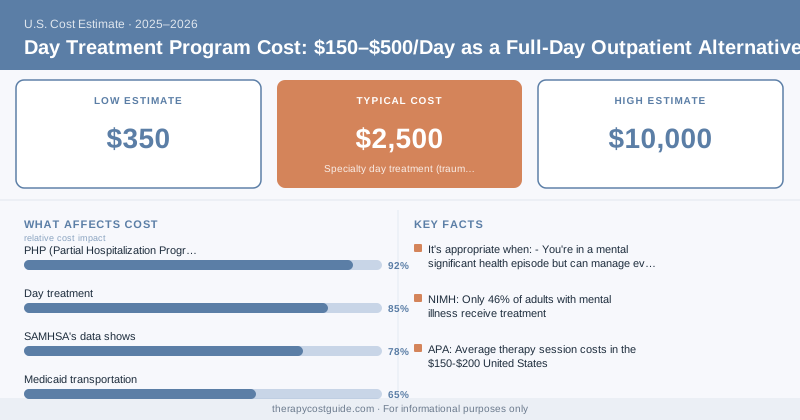
Day Treatment Program Cost: $150–$500/Day as a Full-Day Outpatient Alternative
{ if eq .Lang "zh" }{ else }{ end }What if you could get hospital-level structure and therapeutic intensity — without actually being hospitalized — for a fraction of the cost? Day treatment programs do exactly that. They’re structured, full-day programs that operate weekdays and let you go home at night. For people who need more than weekly therapy but don’t require 24-hour supervision, they’re often the right answer — and significantly more affordable than residential care.
Day Treatment Cost Breakdown
| Program Type | Daily Rate | Weekly Cost | Monthly Estimate |
|---|---|---|---|
| Community-based day treatment | $150 – $250 | $750 – $1,250 | $3,000 – $5,000 |
| Hospital-affiliated day treatment | $250 – $400 | $1,250 – $2,000 | $5,000 – $8,000 |
| Specialty day treatment (trauma, EDs, etc.) | $350 – $500 | $1,750 – $2,500 | $7,000 – $10,000 |
| With in-network insurance (typical copay) | $20 – $75/day | $100 – $375 | $400 – $1,500 |
| Medicaid-covered day treatment | $0 – $15/day | $0 – $75 | $0 – $300 |
Day Treatment vs. PHP: Is There a Difference?
These terms are often used interchangeably, but there’s a technical distinction:
PHP (Partial Hospitalization Program): A specific billing structure under CPT codes 0905F/H0035. Typically 5 hours minimum per day of programming, 5 days/week, with direct physician (usually psychiatrist) oversight. Insurance-defined.
Day treatment: A broader term for structured full-day programming. May or may not meet the specific clinical criteria for PHP billing. Some day treatment programs operate 6–8 hours per day; others are shorter but structured.
In practice, many programs use “PHP” and “day treatment” interchangeably. For insurance purposes, the billing code matters — not the name. If you have insurance, ask the program: “Do you bill this as PHP, and what CPT codes do you use?” This determines your coverage.
Who Day Treatment Is For
Day treatment occupies the space between standard outpatient therapy (1–2 hours/week) and residential care (24 hours/day). It’s appropriate when:
- You’re in a significant mental health episode but can manage evenings and weekends safely
- You’ve been discharged from inpatient or residential and need continued intensive support
- Weekly outpatient therapy isn’t containing your symptoms
- You need psychiatric medication monitoring more frequently than monthly appointments allow
- You’re functional enough to not need hospitalization, but not functional enough to work or attend school full-time
SAMHSA’s data shows that appropriate use of day treatment and PHP can reduce unnecessary inpatient hospitalizations by 20–40% when used as a step-down or step-up intervention.
What a Full Day of Treatment Looks Like
A typical day treatment schedule (8 hours):
| Time | Activity |
|---|---|
| 8:30–9:00 AM | Morning check-in group |
| 9:00–10:30 AM | Skills group (DBT, CBT, or disorder-specific) |
| 10:30–11:00 AM | Break + snack |
| 11:00–12:00 PM | Process group or topic group |
| 12:00–1:00 PM | Lunch (supervised at some programs) |
| 1:00–2:00 PM | Individual therapy (2–3x/week) or elective group |
| 2:00–3:00 PM | Psychoeducation group |
| 3:00–3:30 PM | Medication management with psychiatrist or NP (2–3x/week) |
| 3:30–4:00 PM | Wrap-up group, goal-setting |
This is substantially more therapeutic contact than standard outpatient. Many people experience notable improvement within 2–3 weeks of attending day treatment consistently.
Transportation: The Hidden Cost of Day Treatment
Day treatment requires showing up five days per week. If you don’t have a car or your program is across town, transportation is a real barrier.
Options to explore:
- Medicaid transportation: If you’re on Medicaid, non-emergency medical transportation (NEMT) may cover rides to day treatment. Call your Medicaid plan.
- Program transportation: Some programs provide van transportation for patients.
- Bus passes: Some community mental health centers provide bus passes for patients attending structured programs.
- Telehealth day treatment: A small number of programs have begun offering virtual day treatment that can be attended from home. Insurance coverage for virtual PHP/day treatment varies.
Insurance Authorization for Day Treatment
Commercial insurance covers day treatment (when billed as PHP) with prior authorization. The authorization process typically works as follows:
- Program calls insurer with clinical diagnosis and current symptom presentation
- Insurer reviews against their PHP medical necessity criteria
- Initial authorization covers 5–10 days
- Clinical team submits concurrent review every 5–7 days for continued authorization
- Total authorized course: typically 2–6 weeks
Common denial reasons and responses:
- “Patient can be treated at a lower level of care”: Appeal with documentation of failed outpatient treatment
- “Symptoms are not severe enough”: Request clinical criteria in writing; often the denial criteria are stricter than APA guidelines
- “Not medically necessary”: External independent review is your right; most states require insurers to allow it
Finding Affordable Day Treatment
Federally Qualified Health Centers (FQHCs): Many FQHCs have expanded behavioral health programs including structured day treatment at sliding-scale rates. findahealthcenter.hrsa.gov.
Community mental health centers: State-funded CMHCs often have day treatment programs at very low or no cost for income-eligible individuals.
Hospital financial assistance: Hospital-affiliated day treatment programs typically have charity care and financial assistance programs. Ask the financial counselor (not the intake coordinator) specifically.
Disclaimer: TherapyCostGuide provides cost information for educational purposes only. We are not a mental health provider and do not offer clinical advice or treatment. Cost ranges are based on national survey data and vary significantly by location, provider credentials, practice setting, and insurance plan. Always consult a licensed mental health professional for treatment decisions. If you are in crisis, call or text 988 (Suicide & Crisis Lifeline) or go to your nearest emergency room.