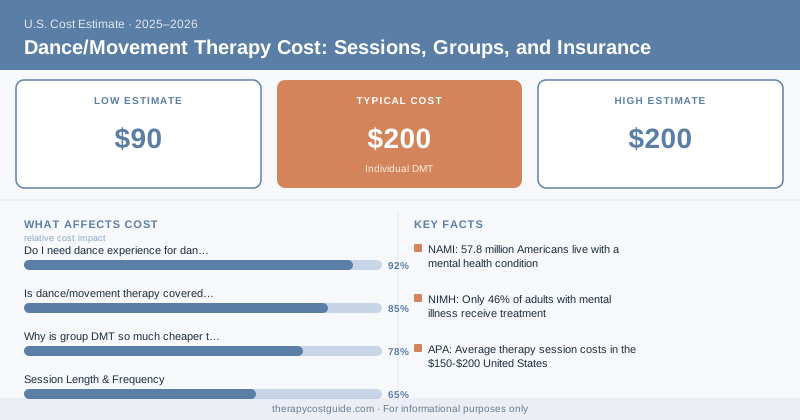
Dance/Movement Therapy Cost: Sessions, Groups, and Insurance
{ if eq .Lang "zh" }{ else }{ end }You don’t need to know how to dance. That’s the first thing a dance/movement therapist will tell you, because the work uses body movement to process emotion, not choreography. An individual session runs $90 to $200, and group sessions, where this modality really shines, drop to $25 to $60 per person.
Dance/movement therapy (DMT) is a recognized form of expressive therapy practiced by credentialed therapists (R-DMT or BC-DMT through the American Dance Therapy Association). It’s used for everything from trauma and anxiety to eating disorders and dementia care. The cost depends heavily on format.
Pricing by Format
| Format | Per Session | Notes |
|---|---|---|
| Individual DMT | $90 – $200 | Credentialed therapist |
| Group DMT | $25 – $60 | Per person, per session |
| Hospital / inpatient program | bundled | Part of treatment cost |
| Community / nonprofit clinic | $30 – $80 | Sliding scale common |
Group is the dominant and most affordable format for DMT, partly because the modality lends itself to shared movement and partly because it’s frequently offered through community arts and mental health programs.
Key Takeaway
Individual dance/movement therapy costs $90–$200 per session, but group sessions ($25–$60 per person) are far more common and affordable. Many people access DMT through community programs or inpatient care where it’s bundled into the overall cost.Does It Actually Work?
The evidence is encouraging. A 2019 Cochrane review examined DMT for depression and found preliminary evidence of benefit, while a separate 2014 meta-analysis in The Arts in Psychotherapy reported moderate effects on anxiety and quality of life. The American Dance Therapy Association, founded in 1966, has built the credentialing standards that distinguish trained therapists from general movement instructors.
The research is less extensive than for talk therapies like CBT, so DMT is often used as a complement rather than a standalone treatment, something to factor into your overall budget.
Insurance Coverage
This is where expressive therapies get tricky. Insurance coverage for DMT is inconsistent. When it’s delivered inside a hospital or licensed treatment program, it’s usually bundled into the covered cost. As standalone outpatient care, it’s frequently out-of-pocket unless your therapist also holds a clinical license (like LCSW or LPC) and bills under standard codes.
Check our guide to does insurance cover therapy for how to verify coverage of expressive modalities. Many people pay cash for DMT, so the group format and community programs matter for affordability.
How DMT Compares Cost-Wise
DMT sits alongside other expressive and body-based therapies. If you’re drawn to body-centered work, somatic therapy and group formats offer similar approaches. For the most budget-friendly route, group DMT runs in the same range as other group therapy.
Frequently Asked Questions
Do I need dance experience for dance/movement therapy? No. DMT uses movement to access and process emotion, not performance. You don’t need any dance background, and many sessions involve simple, guided movement rather than anything resembling a dance class.
Is dance/movement therapy covered by insurance? Sometimes. It’s usually covered when bundled into a hospital or licensed treatment program. As standalone outpatient care, coverage is inconsistent unless the therapist also holds a clinical license and bills standard psychotherapy codes.
Why is group DMT so much cheaper than individual? Group sessions split the therapist’s time across multiple participants and are often subsidized by community or nonprofit programs. At $25 to $60 per person, group DMT is one of the more affordable expressive therapy options.
{ if eq .Lang "zh" }Disclaimer: TherapyCostGuide provides cost information for educational purposes only. We are not a mental health provider and do not offer clinical advice or treatment. Cost ranges are based on national survey data and vary significantly by location, provider credentials, practice setting, and insurance plan. Always consult a licensed mental health professional for treatment decisions. If you are in crisis, call or text 988 (Suicide & Crisis Lifeline) or go to your nearest emergency room.