Couples Therapy Cost 2026: $150–$300 per Session (Gottman, EFT Compared)
{ if eq .Lang "zh" }{ else }{ end }Gottman research has a sobering finding: couples who seek therapy have usually been struggling for six years before making the call. By that point, negative patterns are deeply grooved. That delay — and what it costs — matters more than most couples realize.
Here’s what therapy actually costs in 2026, what the evidence-based methods are, and how to make it financially workable.
Couples Therapy Session Fees in 2026
| Provider / Setting | Typical Session Fee | Session Length |
|---|---|---|
| Licensed Marriage and Family Therapist (LMFT) | $150 – $280 | 60–75 min |
| Licensed Psychologist with couples specialty | $200 – $400 | 60–90 min |
| Gottman-certified therapist | $200 – $350 | 60–90 min |
| EFT (Emotionally Focused Therapy) specialist | $175 – $325 | 60 min |
| Licensed Counselor (LPC/LCSW) with couples training | $120 – $220 | 50–60 min |
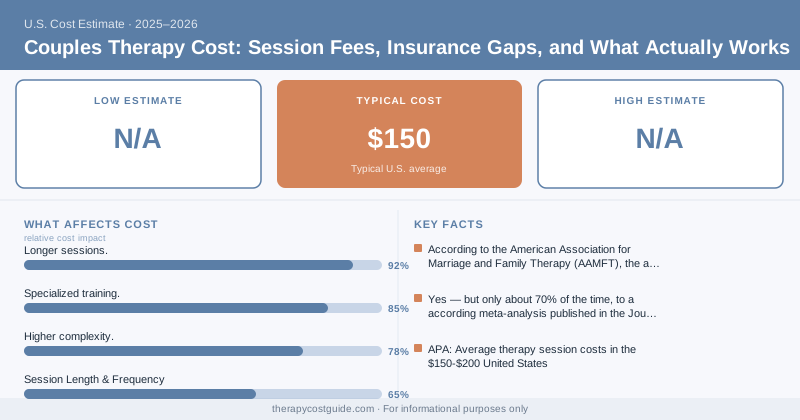
| Typical U.S. average | $150 – $300 | 60 min |
The American Association for Marriage and Family Therapy (AAMFT) puts the national average for a couples session at approximately $190–$250. High-cost cities — NYC, LA, SF, Boston — easily push to $300–$400 for experienced specialists.
Gottman Method vs. EFT: What’s the Difference?
These are the two dominant evidence-based approaches to couples therapy. They’re different in theory and practice.
Gottman Method is based on 40+ years of research by Drs. John and Julie Gottman. It’s behavioral and skills-focused: couples learn specific communication tools (softened startup, repair attempts, bids for connection), identify their “Four Horsemen” conflict patterns, and build friendship and intimacy through structured exercises. It suits couples who want practical tools and a skills-building framework.
Gottman certification involves multiple trainings beyond a clinical license. Certified Gottman Therapists typically charge more than non-certified therapists — and with good reason. The certification has real depth.
Emotionally Focused Therapy (EFT) was developed by Dr. Sue Johnson. It’s attachment-based: the premise is that most relationship distress comes from attachment injuries (feeling abandoned, rejected, or not prioritized). EFT helps couples identify their emotional “cycles” and access vulnerable underlying emotions that drive conflict. It tends to suit couples dealing with emotional disconnection, affairs, or deep attachment wounds. A 2013 meta-analysis found EFT effective for 70–73% of couples, with gains maintained at follow-up.
CBT couples therapy is another option — less focused on emotional dynamics, more on communication patterns and behavioral change. Often used for specific skill deficits.
Most experienced couples therapists aren’t strictly one-model; they draw on multiple frameworks based on what the couple needs. The credential matters more than the specific model label.
Intensive Retreats vs. Weekly Sessions
Couples intensives — multi-day retreats or weekend sessions — compress 20+ regular sessions into 2–3 days. They typically cost $3,000–$7,000 for the intensive. Some couples strongly prefer them because they force total focus without the interruption of work, kids, and daily stress between sessions. They’re not appropriate for all couples (active crisis, safety concerns) but can be dramatically more efficient for motivated couples with scheduling constraints or limited access to local specialists.The Insurance Problem
This is the big reality to understand upfront: most insurance plans don’t cover couples therapy.
Why? Because insurance requires a diagnosable mental health condition as the basis for coverage. “Relationship distress” isn’t a billable diagnosis. Couples therapy without an individual diagnosis doesn’t qualify under most plans.
The exception: if one partner has a diagnosed mental health condition (depression, PTSD, anxiety disorder) and the couples therapy is documented as part of treating that condition, some insurers will cover it. This is a legitimate billing approach in some circumstances — it requires your therapist to maintain an individual diagnosis and document medical necessity accordingly.
Don’t assume. Call your insurer and ask: “Is couples therapy or marriage counseling a covered benefit under my plan?” Ask them to specify the criteria. Get the answer in writing if possible.
APA data indicates that approximately 40–50% of first marriages end in divorce in the United States, with financial stress consistently ranking among the top cited causes. Couples therapy at $2,000–$4,000 for a full course is, for many couples, considerably less than the cost of divorce — financially and otherwise.
What a Full Course of Couples Therapy Costs
A standard course runs 12–20 sessions. Complex issues — infidelity, long-standing contempt, major betrayals — often extend to 24–36 sessions.
At $200/session:
- 12 sessions: $2,400
- 20 sessions: $4,000
- 30 sessions: $6,000
At $250/session:
- 12 sessions: $3,000
- 20 sessions: $5,000
How to Make Couples Therapy More Affordable
Use an LMFT or LPC with couples training rather than a PhD psychologist unless you specifically need that credential level. The clinical outcomes for skilled master’s-level therapists in couples work are comparable; the fees are lower.
Biweekly sessions once you’ve stabilized from the acute phase. Weekly is ideal early on; biweekly during maintenance phases cuts monthly costs in half.
Ask about sliding scale. Many therapists don’t advertise it but have a spot or two at reduced rates. Say: “Our budget for sessions is around $X — is that something you can work with?”
Check your EAP. Employee Assistance Programs often cover 6–10 free sessions, and some cover couples therapy explicitly. Find your EAP provider on your pay stub or HR portal. It’s confidential — your employer doesn’t know what you discuss or who you see.
Online couples therapy: Platforms and telehealth options run $100–$200/session — meaningfully less than in-person rates for comparable quality. Gottman-trained and EFT-trained therapists increasingly offer telehealth.
{ if eq .Lang "zh" }Disclaimer: TherapyCostGuide provides cost information for educational purposes only. We are not a mental health provider and do not offer clinical advice or treatment. Cost ranges are based on national survey data and vary significantly by location, provider credentials, practice setting, and insurance plan. Always consult a licensed mental health professional for treatment decisions. If you are in crisis, call or text 988 (Suicide & Crisis Lifeline) or go to your nearest emergency room.