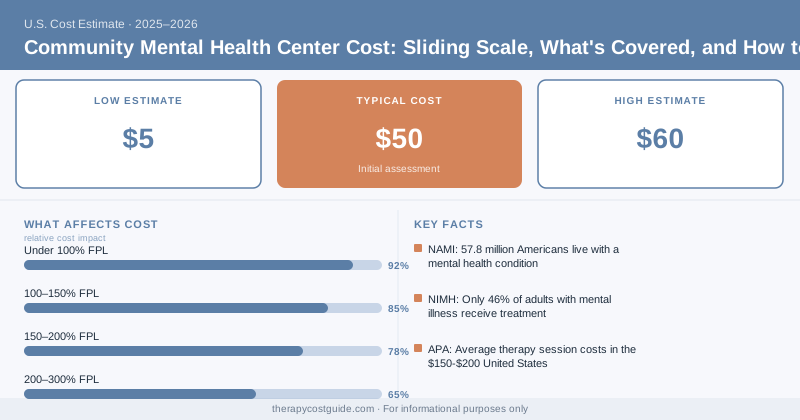
Community Mental Health Center Cost: Sliding Scale, What's Covered, and How to Enroll
{ if eq .Lang "zh" }{ else }{ end }Community mental health centers are the most underused resource in U.S. mental health care. They’ll see anyone, regardless of insurance status or ability to pay. They offer the full range of mental health services, from individual therapy to psychiatry to crisis services. And their sliding scale fees can be as low as zero.
The catch is that most people don’t know they exist, and the ones who do often have misconceptions about quality. Let’s clear that up.
SAMHSA’s 2023 Behavioral Health Spending and Use report estimates that community mental health centers and federally funded behavioral health providers serve approximately 8.4 million Americans annually, making them the backbone of mental health care access in the United States.
What Is a Community Mental Health Center?
Community mental health centers (CMHCs) are organizations — often non-profits — that receive federal and state funding to provide mental health services to their communities regardless of ability to pay. Federal CMHCs are required to:
- Accept all patients, regardless of insurance status or income
- Offer sliding scale fees based on ability to pay
- Provide a comprehensive array of services including therapy, psychiatry, and crisis services
- Give priority to people with serious mental illnesses (SMIs) and people with low incomes
CMHCs are distinct from private practices and private hospitals — they’re specifically designed as safety-net providers.
| CMHC Service | Self-Pay (Sliding Scale) | Medicaid/Medicare | Private Insurance |
|---|---|---|---|
| Initial assessment | $0–$60 | $0–$5 | $0–$50 copay |
| Individual therapy session | $0–$80 | $0–$5 | $20–$60 copay |
| Group therapy session | $0–$30 | $0–$5 | $15–$40 copay |
| Psychiatric evaluation | $0–$100 | $0–$5 | $30–$75 copay |
| Medication management visit | $0–$60 | $0–$3 | $20–$50 copay |
| Crisis intervention | $0 | $0 | $0 |
How Sliding Scale Works at CMHCs
CMHC sliding scale fees are based on your household income relative to the federal poverty level (FPL). A typical structure:
- Under 100% FPL (about $15,000/year single person, 2025): $0/session
- 100–150% FPL: $5–$20/session
- 150–200% FPL: $20–$40/session
- 200–300% FPL: $40–$60/session
- 300%+ FPL: Full rate (which is usually still below private practice rates)
To get sliding scale pricing, you’ll provide documentation of income at intake — typically a pay stub, tax return, or statement of benefits.
What Services CMHCs Provide
Outpatient mental health — Individual therapy, group therapy, couples and family therapy (at many centers), case management.
Psychiatric services — Psychiatric evaluation, medication management, medication monitoring.
Crisis services — Most CMHCs have crisis lines, crisis stabilization programs, and mobile crisis teams. These are typically available 24/7 and are often the first call in the local mental health crisis response system.
Intensive services — Many CMHCs offer IOP (intensive outpatient programs), partial hospitalization (PHP), and residential programs for people who need more intensive support.
Specialty programs — Substance use disorder treatment, ACT (Assertive Community Treatment) for severe mental illness, supported employment, supported housing, peer support services.
The Quality Question: What to Expect from CMHC Therapy
CMHCs have a reputation — fair or not — for being lower quality than private practice. The reality is more nuanced:
CMHC therapists are licensed professionals with the same credentials as private practice therapists (LCSW, LPC, LMFT). The difference is caseload: CMHC therapists often carry larger caseloads than private practice therapists, and turnover rates can be higher due to lower pay.
CMHC strengths: Wrap-around services, crisis support, case management, access to psychiatry in the same system, ability to serve complex presentations.
CMHC limitations: Potentially longer wait times for initial appointment (2–6 weeks at many centers), less therapist continuity due to turnover, less choice in selecting your specific therapist.
For people without insurance or with very low incomes, CMHCs deliver professional care that would otherwise be completely inaccessible.
How to Find and Enroll in a CMHC
Find your nearest CMHC:
- SAMHSA’s behavioral health treatment locator: findtreatment.gov
- Call 211 — the national social services hotline; they’ll give you local CMHC options
- Search “[your county] behavioral health” — county behavioral health departments often operate or fund CMHCs
What to expect at enrollment:
- Initial phone call to request an intake appointment
- In-person or telehealth intake assessment (1–2 hours) with a clinician
- Income verification for sliding scale determination
- Assignment to a therapist or care team
- Begin services — timeline from intake to first appointment varies: 1–4 weeks at most centers
Federally Qualified Health Centers (FQHCs): Related Option
FQHCs receive federal funding and must also serve all patients regardless of ability to pay. Many FQHCs offer integrated behavioral health — either on-site therapists/psychiatrists or co-located partners.
FQHCs may be more accessible in rural areas where dedicated CMHCs don’t exist. Find FQHCs at findahealthcenter.hrsa.gov.
Disclaimer: TherapyCostGuide provides cost information for educational purposes only. We are not a mental health provider and do not offer clinical advice or treatment. Cost ranges are based on national survey data and vary significantly by location, provider credentials, practice setting, and insurance plan. Always consult a licensed mental health professional for treatment decisions. If you are in crisis, call or text 988 (Suicide & Crisis Lifeline) or go to your nearest emergency room.