Cognitive Processing Therapy (CPT) Cost: 12-Session Protocol, VA Coverage, and Self-Pay Rates
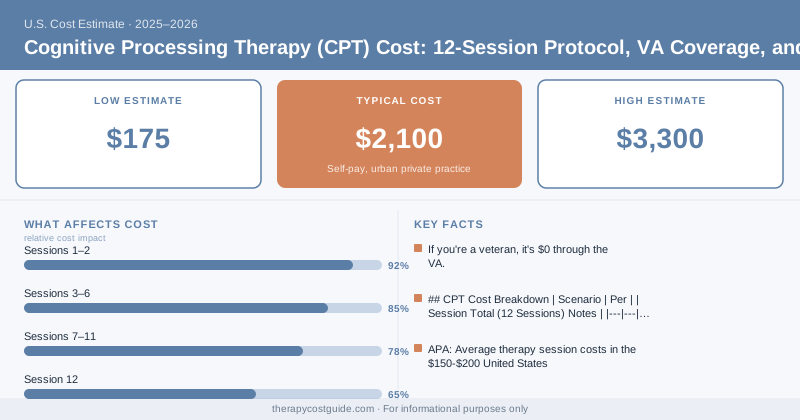
{ if eq .Lang "zh" }{ else }{ end }$1,800. That’s what 12 sessions of CPT costs self-pay with a licensed therapist in most U.S. cities — roughly $150/session for a complete, structured course of the gold-standard PTSD treatment endorsed by both the Department of Veterans Affairs and the American Psychological Association. If you’re a veteran, it’s $0 through the VA. Here’s everything you need to know about CPT costs and how to access it.
CPT Cost Breakdown
| Scenario | Per Session | Total (12 Sessions) | Notes |
|---|---|---|---|
| VA or DoD (veterans) | $0 | $0 | Free for eligible veterans |
| In-network insurance | $20 – $60 | $240 – $720 | After deductible |
| Self-pay, community therapist | $100 – $200 | $1,200 – $2,400 | Most common self-pay range |
| Self-pay, university training clinic | $30 – $80 | $360 – $960 | Supervised trainee therapists |
| Self-pay, urban private practice | $175 – $275 | $2,100 – $3,300 | NYC, LA, San Francisco |
| Sliding scale / Open Path | $30 – $80 | $360 – $960 | Income-based reduced rates |
What Is CPT?
Cognitive Processing Therapy is a structured 12-session evidence-based therapy for PTSD developed by Dr. Patricia Resick in the 1980s. The VA/DoD Clinical Practice Guideline for PTSD gives CPT its highest “strongly recommended” rating — the same tier as Prolonged Exposure and EMDR.
CPT works by addressing “stuck points” — trauma-related beliefs that have become distorted and are maintaining the PTSD. Common stuck points include:
- “It was my fault” (self-blame)
- “I should have known / done something”
- “The world is completely dangerous now”
- “I can never trust anyone”
- “I’m permanently damaged”
Sessions follow a structured protocol: written accounts of the traumatic event, Socratic questioning of stuck points, and worksheets called “Challenging Questions” and “Impact Statements” that help restructure trauma-related beliefs.
The 12-Session Structure
CPT is unusual in therapy because the protocol is fixed. A competent CPT provider does CPT — not a modified version with similar elements. The 12-session structure:
Sessions 1–2: Psychoeducation about PTSD, overview of CPT model, writing the Impact Statement (essay describing your beliefs about why the trauma happened and its effects on your life)
Sessions 3–6: Identifying stuck points, introducing the Challenging Questions worksheet, ABC worksheets for trauma-related thoughts
Sessions 7–11: Working through five themes — Safety, Trust, Power/Control, Esteem, Intimacy — as each is affected by the traumatic event
Session 12: Review, writing a new Impact Statement, relapse prevention planning
Between sessions, there are daily worksheets. This isn’t light homework — some weeks involve 30–60 minutes daily. The out-of-session work is a core component of the protocol, not optional.
CPT vs. EMDR: The Cost Comparison
Both CPT and EMDR are effective for PTSD. Here’s how they compare from a cost perspective:
CPT: Fixed 12 sessions, predictable total cost ($1,200–$3,300), structured homework, less reliant on specific therapist-patient chemistry.
EMDR: 8–20+ sessions for single-incident trauma; potentially 30–60+ for complex trauma. Less predictable in duration and total cost.
For single-incident PTSD with a limited budget: CPT’s fixed 12-session protocol makes it easier to plan financially. $1,200–$2,400 and you know what you’re getting.
For complex trauma: Both may take longer; outcomes research doesn’t clearly favor one over the other for complex presentations. Personal preference and therapist expertise matter more.
How to Find a CPT-Certified Therapist
CPT requires specific training. Many therapists list “trauma therapy” or even “CPT” in their profiles without having completed the formal training. The PTSD Consultation Program (PTSD.va.gov) maintains a provider locator for VA-trained CPT therapists, many of whom also see private patients.
Ask your potential therapist directly: “Have you completed the formal CPT training from the CPT Institute or VA, and can you describe the 12-session protocol to me?” A trained CPT therapist can immediately describe the protocol, including the Stuck Points Logs and Challenging Questions worksheets. If they can’t, they’re not doing CPT — they’re doing something else.
The EMDRIA (EMDR) and CPT Institute directories are the most reliable sources for certified therapists.
VA Coverage: Free for Veterans
The Department of Veterans Affairs considers CPT a first-line treatment for PTSD in veterans. All VA medical centers are required to have CPT-trained clinicians. For eligible veterans, CPT is available at no cost.
Who qualifies for VA mental health care:
- Veterans with any discharge status other than dishonorable
- Service-connected mental health conditions: covered regardless of income
- Non-service-connected conditions: covered based on priority group and income
Veterans who live far from a VA: The VA MISSION Act provides community care authorization for veterans who cannot access their VA within wait time standards or drive distances. This allows the VA to pay for CPT from a community provider.
MST-related PTSD: Veterans who experienced Military Sexual Trauma can receive counseling including CPT without service-connected disability status and without income assessment. Every VA medical center has an MST coordinator.
Does Insurance Cover CPT?
Yes — CPT is standard psychotherapy and billed using standard individual therapy CPT codes (90837, 90834). If your insurer covers outpatient mental health therapy, they cover CPT. You pay your standard copay or coinsurance.
The practical barrier is finding an in-network therapist who is CPT-trained. The shortage of trained CPT providers in some areas means your in-network options may be limited. If no in-network CPT therapist is available, some insurers will authorize out-of-network care for a specific evidence-based protocol that isn’t available in-network — ask your insurer’s case management department.
Disclaimer: TherapyCostGuide provides cost information for educational purposes only. We are not a mental health provider and do not offer clinical advice or treatment. Cost ranges are based on national survey data and vary significantly by location, provider credentials, practice setting, and insurance plan. Always consult a licensed mental health professional for treatment decisions. If you are in crisis, call or text 988 (Suicide & Crisis Lifeline) or go to your nearest emergency room.