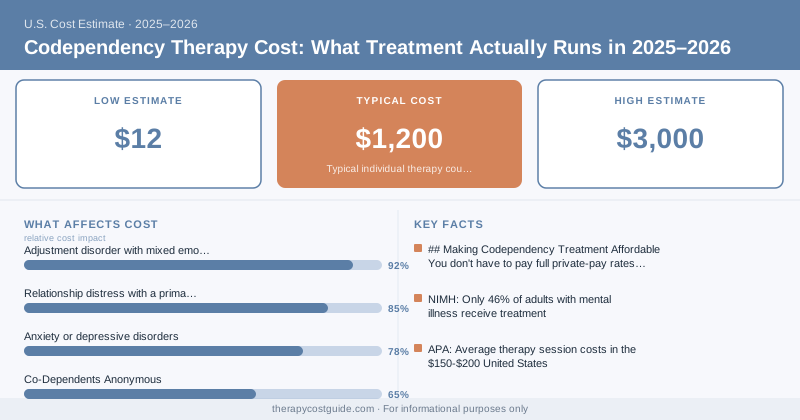
Codependency Therapy Cost: What Treatment Actually Runs in 2025–2026
{ if eq .Lang "zh" }{ else }{ end }About 96 million Americans show patterns of codependency — learned behaviors that damage self-worth and relationships, according to SAMHSA estimates. That number is startling, partly because codependency doesn’t always look like what people expect. It’s not just being “too nice.” It’s a pattern of excessive emotional reliance on another person, often a partner or family member struggling with addiction or mental illness, that erodes your own sense of identity over time.
The good news: codependency is highly treatable. The cost of treatment varies a lot depending on what path you choose.
Codependency Therapy Cost at a Glance
| Option | Cost | Notes |
|---|---|---|
| Individual therapy (CBT/DBT) | $100 – $250/session | Standard 50-min session, licensed therapist |
| Online therapy (BetterHelp/Talkspace) | $60 – $100/week | Subscription includes messaging + video |
| Intensive outpatient program (IOP) | $200 – $500/day | Codependency-focused, typically 3–5 days/week |
| Co-Dependents Anonymous (CoDA) | Free | 12-step peer support meetings |
| Codependency workbooks | $10 – $30 | Self-guided; “Codependent No More” widely used |
| Typical individual therapy course | $1,200 – $3,000 | 12–20 sessions, private pay |
Most people treating codependency do a combination: individual therapy for the deeper personal work plus a free peer group like CoDA for ongoing support. That combination keeps costs manageable while covering both clinical treatment and community accountability.
What Does Codependency Therapy Actually Involve?
Codependency isn’t a standalone DSM-5 diagnosis — it’s most often addressed within individual therapy, couples therapy, or family therapy using Cognitive Behavioral Therapy (CBT), Dialectical Behavior Therapy (DBT), or Emotionally Focused Therapy (EFT). The focus is on:
- Recognizing enabling patterns and people-pleasing behaviors
- Building a stable sense of self outside of caretaking roles
- Setting and maintaining boundaries
- Processing the underlying attachment wounds that drive codependent patterns
SAMHSA research consistently shows that codependency frequently develops in family members of people with substance use disorder — it’s a relational response to an unstable or chaotic home environment, often learned in childhood. That origin means therapy often involves some trauma-informed work alongside the relationship-pattern focus.
A typical course of individual therapy runs 12–20 sessions, though many people continue longer. If the codependency is deeply entangled with a partner’s active addiction or mental health crisis, family or couples therapy may run simultaneously.
Co-Dependents Anonymous (CoDA) Is a Real Clinical Supplement
CoDA is a free, peer-led 12-step program specifically for codependency — not addiction. It runs meetings in all 50 states and online globally. Many licensed therapists actively recommend CoDA alongside individual therapy because it provides ongoing community support, a structured step-work process, and accountability. You don’t have to choose between therapy and CoDA: they work well together. Find meetings at coda.org.Does Insurance Cover Codependency Therapy?
Insurance coverage depends on how the treatment is coded. Codependency itself isn’t a billable diagnosis, but the underlying issues usually are. Therapists billing for codependency treatment typically use diagnoses such as:
- Adjustment disorder with mixed emotional features
- Relationship distress with a primary support group (Z63.0 ICD-10 code)
- Anxiety or depressive disorders — which commonly co-occur with codependency
When coded under these diagnoses, sessions are treated as standard outpatient mental health — subject to your deductible, copay, and any session limits on your plan. Most PPO and ACA marketplace plans cover this. Medicaid coverage varies significantly by state.
If you’re in a codependency-specific intensive outpatient program, check whether it’s licensed as a behavioral health IOP — those billing codes (H0015, H2036) are often reimbursed by insurance, including Medicaid.
Online Therapy for Codependency
Platforms like BetterHelp and Talkspace have made codependency therapy significantly more accessible, especially for people in areas without specialists. At $60–$100/week, they’re considerably cheaper than private-pay in-person sessions. The limitation: you’re matched to a therapist based on availability, not specialty. If codependency work is your specific focus, ask directly in the matching questionnaire for someone with experience in relationship patterns, attachment, or family-of-origin issues.
Making Codependency Treatment Affordable
You don’t have to pay full private-pay rates to get effective help:
- Co-Dependents Anonymous: Completely free; available online and in person nationwide (coda.org)
- Community mental health centers: Sliding-scale individual therapy, often $20–$60/session based on income
- University training clinics: Graduate trainees supervised by licensed clinicians offer sessions at $0–$50
- SAMHSA’s National Helpline: 1-800-662-4357 — free, confidential treatment referrals 24/7, including family therapy resources
- Employee Assistance Programs (EAPs): Many employers offer 3–8 free therapy sessions; codependency and relationship issues are specifically covered
The most important thing is starting. Codependency patterns often feel so normal that people don’t recognize them as treatable — they just feel like “who I am.” Therapy can change that, and the first step costs nothing more than a phone call to your insurance company or SAMHSA’s helpline.
{ if eq .Lang "zh" }Disclaimer: TherapyCostGuide provides cost information for educational purposes only. We are not a mental health provider and do not offer clinical advice or treatment. Cost ranges are based on national survey data and vary significantly by location, provider credentials, practice setting, and insurance plan. Always consult a licensed mental health professional for treatment decisions. If you are in crisis, call or text 988 (Suicide & Crisis Lifeline) or go to your nearest emergency room.