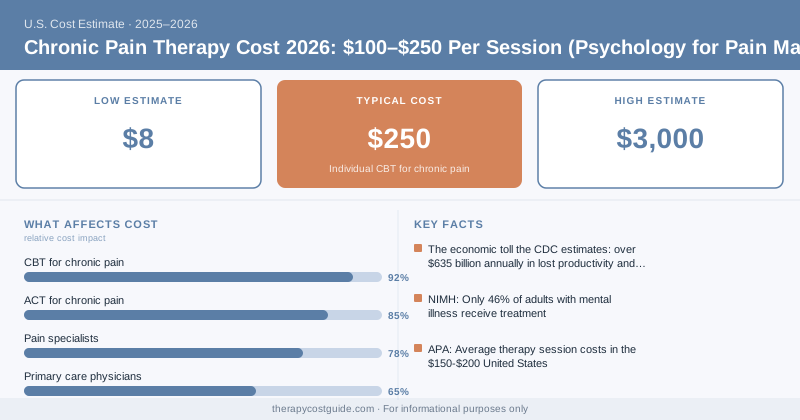
Chronic Pain Therapy Cost 2026: $100–$250 Per Session (Psychology for Pain Management)
{ if eq .Lang "zh" }{ else }{ end }50 million American adults live with chronic pain every day. That’s not a rounding error — it’s roughly 1 in 5 adults, according to the CDC’s 2021 National Health Interview Survey. And somewhere around 17 million of them have chronic pain severe enough to limit daily activities. The economic toll the CDC estimates: over $635 billion annually in lost productivity and healthcare costs.
Here’s what most people with chronic pain don’t know: psychology is one of the most evidence-backed treatments available — not as a replacement for medical care, but as a critical part of it. And it’s often covered by insurance in ways that surprise people.
What Does Psychological Pain Treatment Actually Cost?
| Treatment Type | Per Session | Full Program Cost |
|---|---|---|
| Individual CBT for chronic pain | $100–$250/session | $800–$3,000 (8–12 sessions) |
| Individual ACT for chronic pain | $100–$250/session | $800–$3,000 |
| Interdisciplinary pain program (inpatient/intensive) | N/A | $5,000–$15,000+ |
| Online pain management program (e.g., Curable, PainPathways) | N/A | $100–$400/year |
| Group CBT pain program | $40–$80/session | $400–$800 for full group series |
The biggest variables are setting and intensity. Individual sessions with a private practice pain psychologist run $150–$250 in most metro areas. Interdisciplinary pain programs — intensive, multi-week programs involving psychology, physical therapy, occupational therapy, and medicine working simultaneously — cost $5,000–$15,000 or more, but have the strongest evidence base for severe chronic pain.
CBT and ACT: What You’re Actually Paying For
These aren’t just “talking about your feelings.” Both CBT (Cognitive Behavioral Therapy) and ACT (Acceptance and Commitment Therapy) for chronic pain involve specific, teachable skills.
CBT for chronic pain focuses on:
- Identifying thought patterns that amplify pain (catastrophizing, fear-avoidance)
- Pacing activity to break the boom-bust cycle that worsens pain long-term
- Relaxation and sleep hygiene skills
- Behavioral activation — continuing meaningful activities despite pain
ACT for chronic pain focuses on:
- Accepting pain without struggling against it (which paradoxically reduces suffering)
- Identifying values and committing to action aligned with those values regardless of pain levels
- Cognitive defusion — seeing thoughts as thoughts, not facts
- Reducing experiential avoidance that keeps people restricted and isolated
Research published in JAMA Internal Medicine and Pain (the journal) consistently shows both approaches reduce pain-related disability, improve function, and decrease psychological distress even when pain intensity doesn’t fully resolve. The goal isn’t zero pain — it’s a full life alongside whatever pain remains.
Pain Psychology vs. Regular Therapy
A general therapist can offer supportive counseling for someone struggling with chronic pain, but pain psychologists bring specific expertise: they understand the neuroscience of central sensitization, they’re familiar with common pain conditions (fibromyalgia, CRPS, back pain, headache disorders), and they collaborate directly with medical providers. If your pain has been present for more than three months and is affecting your function, seek out a pain psychologist specifically — not just any therapist.Who Qualifies for a Pain Psychology Referral?
Most referrals come from:
- Pain specialists (physiatrists, anesthesiologists running pain clinics) who use interdisciplinary teams
- Primary care physicians managing patients with complex or treatment-resistant pain
- Rheumatologists treating fibromyalgia, arthritis, or connective tissue disorders
- Neurologists managing headache disorders, neuropathy, or CRPS
You don’t need a referral to seek out a pain psychologist directly, but having one often helps with insurance authorization. If you’re in a pain specialty clinic, ask directly: “Do you have a psychologist on your team?” Many do and don’t proactively mention it.
Self-referral is also an option. A pain psychologist can treat you independently and coordinate with your other providers. Look for listings under the American Psychological Association’s pain psychology division or through the Association for Behavioral and Cognitive Therapies.
Insurance Coverage: Better Than You Think
Unlike standard therapy for anxiety or depression, pain psychology often routes through your medical benefit rather than your mental health benefit. This distinction matters:
- Medical benefits typically have lower copays and better coverage limits
- Prior authorization requirements are common but obtainable with physician support
- Medicare Part B covers psychotherapy for pain management as a medical service
- Medicaid coverage varies by state but generally covers it when medically necessary
The key to getting coverage: have your prescribing physician or pain specialist document the medical necessity. A letter stating that psychological treatment is part of an integrated pain management plan significantly improves authorization success.
Interdisciplinary pain programs are often partially covered by commercial insurance for patients who’ve failed prior treatments, though coverage varies widely. Your insurer may require documentation of failed conventional treatments (medications, injections, physical therapy) before approving an intensive program.
Interdisciplinary Pain Programs: The Heavy Hitters
For severe, treatment-resistant chronic pain — the kind that’s been present for years and hasn’t responded to medication, surgery, or conventional PT — interdisciplinary programs offer the most intensive option.
These programs typically run 3–4 weeks, often intensive outpatient (Monday–Friday), and involve daily sessions with a team that includes:
- Pain psychologist
- Physical therapist
- Occupational therapist
- Physician (MD or DO specializing in rehabilitation or pain medicine)
- Sometimes a pharmacist for medication management
Total cost: $5,000–$15,000+ depending on program length and insurance coverage. The evidence behind these programs — particularly for disabling conditions like CRPS, fibromyalgia, and post-surgical pain — is some of the strongest in chronic pain medicine.
Is It Worth the Cost?
Consider the alternative math. Chronic pain patients use healthcare resources at 2–4 times the rate of non-pain patients. The average person with undertreated chronic pain spends thousands annually on medication, imaging, procedures, and specialist visits — often without meaningful improvement in function.
An 8–12 session course of CBT ($800–$2,000 after insurance) that meaningfully reduces disability — even without reducing pain intensity — often pays for itself in reduced downstream healthcare use, less missed work, and better quality of life. The research supports it. The insurance coverage is better than most people expect. The main barrier, usually, is knowing to ask for it.
Ask your pain doctor directly: “Can I be referred to a pain psychologist?” If they don’t have one in-house, ask for an external referral. It’s one of the most underutilized tools in pain management.
{ if eq .Lang "zh" }Disclaimer: TherapyCostGuide provides cost information for educational purposes only. We are not a mental health provider and do not offer clinical advice or treatment. Cost ranges are based on national survey data and vary significantly by location, provider credentials, practice setting, and insurance plan. Always consult a licensed mental health professional for treatment decisions. If you are in crisis, call or text 988 (Suicide & Crisis Lifeline) or go to your nearest emergency room.