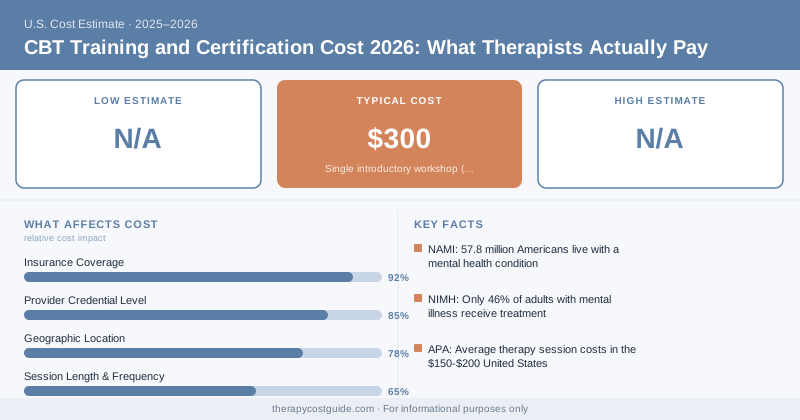
CBT Training and Certification Cost 2026: What Therapists Actually Pay
{ if eq .Lang "zh" }{ else }{ end }Who’s paying $6,000 for training that doesn’t change what a therapist is legally allowed to do? A lot of clinicians, actually — because formal CBT certification isn’t a licensing requirement, it’s a credibility and specialization investment, and for many private-practice therapists it pays for itself through better referrals and higher self-pay rates within a year or two.
Cognitive behavioral therapy (CBT) is one of the most extensively researched psychotherapy modalities, with decades of clinical trial support for conditions ranging from depression and anxiety to insomnia and eating disorders. Most graduate programs teach CBT fundamentals, but formal certification — often through the Beck Institute for Cognitive Behavior Therapy, founded by Dr. Aaron Beck’s daughter Dr. Judith Beck — goes considerably deeper into specialized protocols and supervised case consultation.
CBT Training Cost Breakdown
| Training Level | Typical Cost | Format |
|---|---|---|
| Single introductory workshop (1–2 days) | $300 – $800 | In-person or live virtual |
| Multi-day intensive training | $1,200 – $2,500 | 3–5 day immersive program |
| Full certification track (with supervised consultation) | $3,000 – $6,000+ | Multi-month, includes case review |
| Online self-paced CBT course | $150 – $600 | Asynchronous, lower CE credit value typically |
| Specialty CBT certification (e.g., CBT for insomnia, OCD) | $1,500 – $4,000 | Focused protocol training |
Beyond the training fee itself, budget for travel and lodging if the program is in-person, plus the time cost of supervised consultation hours, which for full certification tracks can stretch over several months of ongoing case review with a certified trainer.
Why Certification Costs What It Does
Full CBT certification programs typically require documented supervised practice — meaning a certified trainer reviews your actual session recordings or case notes and provides individualized feedback, sometimes across dozens of hours. That supervision time, delivered by highly credentialed trainers, is the main cost driver beyond the initial workshop material itself. It’s a meaningfully different (and more expensive) product than a weekend seminar.
Confirm CE Credit Before You Enroll
Most state licensing boards require a set number of continuing education (CE) hours for license renewal, and CBT training that carries approved CE credit effectively pays for itself twice — once through clinical skill development and once by satisfying a renewal requirement you’d need to meet anyway through some other paid course. Confirm CE approval for your specific license type and state before paying for any CBT program, since accreditation varies by state licensing board.Is Certification Worth It Financially?
For therapists building a private practice, formal CBT certification can support raising self-pay session rates and can be a meaningful differentiator on directories like Psychology Today, where specialization credentials are prominently displayed. It also often qualifies clinicians for specific insurance panel requirements or specialty referral networks (for example, some CBT for insomnia or CBT for OCD referral networks require documented specialty training).
For therapists early in their career or working primarily in community mental health or hospital settings where salary isn’t directly tied to specialization credentials, a lower-cost workshop series may deliver most of the clinical value without the full certification price tag.
Who Pays for This — Clinicians or Practices?
Group practices sometimes cover CBT training costs for staff therapists as a retention and quality investment, particularly for specialty tracks like CBT for insomnia or trauma-focused CBT that support the practice’s referral marketing. Solo practitioners typically pay out of pocket but can often deduct the cost as a business expense, and many programs offer payment plans for their higher-tier certification tracks.
For clients researching whether their therapist has formal CBT credentials, this training cost context helps explain the pricing difference between a general talk therapist and a specialist — a distinction covered further in the guide comparing therapist versus psychiatrist costs and specialization.
Bottom Line
CBT training runs from a few hundred dollars for a single workshop to $6,000+ for full certification with supervised consultation. It’s not required to practice CBT, but for clinicians building a specialty practice, the investment often pays for itself through referrals, panel eligibility, and CE credit that satisfies license renewal requirements anyway.
{ if eq .Lang "zh" }Disclaimer: TherapyCostGuide provides cost information for educational purposes only. We are not a mental health provider and do not offer clinical advice or treatment. Cost ranges are based on national survey data and vary significantly by location, provider credentials, practice setting, and insurance plan. Always consult a licensed mental health professional for treatment decisions. If you are in crisis, call or text 988 (Suicide & Crisis Lifeline) or go to your nearest emergency room.