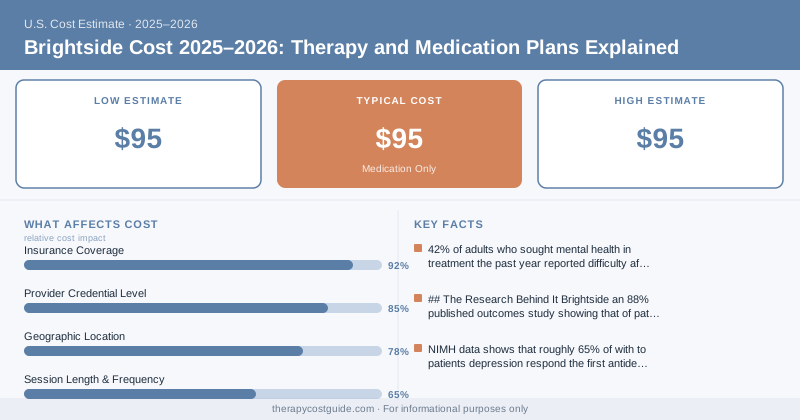
Brightside Cost 2025–2026: Therapy and Medication Plans Explained
{ if eq .Lang "zh" }{ else }{ end }42% of adults who sought mental health treatment in the past year reported difficulty affording it, according to a 2023 KFF Health Tracking Poll. Brightside was built specifically to close that gap for depression and anxiety — two of the most common and most undertreated conditions in the U.S.
Here’s what it actually costs and whether the value holds up under scrutiny.
Brightside’s Pricing Structure
Brightside uses a three-tier model. You can subscribe to therapy only, medication only, or both combined.
| Plan | Monthly Cost | Sessions / Visits |
|---|---|---|
| Medication Only | $95/month | Monthly prescriber video visits |
| Therapy Only | $299/month | Monthly therapy sessions (up to 4) |
| Medication + Therapy | $349/month | Prescriber visits + up to 4 therapy sessions |
Medication costs are not included in plan fees. Most patients pay $10–$40/month for generic antidepressants or anti-anxiety medications on top of the subscription cost. Brightside does not prescribe controlled substances (no benzodiazepines, no stimulants).
The Medication Plan — What to Expect
The $95/month medication plan includes:
- Initial prescriber consultation (25–45 minutes via video)
- Monthly follow-up visits to adjust dosing
- Message-based communication between visits
- Access to Brightside’s symptom tracking tools (PHQ-9 scores, GAD-7)
The symptom tracking is actually one of Brightside’s stronger differentiators. The platform uses validated clinical scales — the same PHQ-9 and GAD-7 tools used in clinical practice — to track your progress over time. You can see your own data, which helps both you and your prescriber make better decisions.
The limitation: this is a medication management service, not a therapy service. The prescriber visits are focused on medication efficacy and tolerability, not on processing what’s going on in your life.
The Therapy Plan
Brightside’s therapy plan uses licensed therapists (LCSWs, LPCs, psychologists) who specialize in cognitive behavioral therapy (CBT) and other evidence-based approaches for depression and anxiety.
At $299/month for up to 4 sessions, that works out to roughly $75/session if you use all four. That’s competitive — especially given that in-person therapy in most U.S. cities runs $120–$200/session.
The therapy plan doesn’t include medication management. If you want both, you’re looking at the combined $349/month plan.
Who It’s For
Brightside is focused almost entirely on depression and anxiety — it’s not a general mental health platform. That focus is a feature, not a limitation, for the right patient.
It’s a strong fit for:
- Someone with a clear diagnosis of MDD, GAD, panic disorder, or social anxiety
- People who want evidence-based treatment with measurable outcomes tracking
- Patients who’ve tried therapy before and want a more structured, CBT-focused approach
It’s not ideal for:
- ADHD (no stimulants)
- Bipolar disorder, schizophrenia, or complex psychiatric conditions
- Anyone who needs a controlled substance prescription
Insurance Coverage
Brightside accepts insurance from several major carriers. Covered plans have included Aetna, United Healthcare, Cigna, and select BCBS plans. With insurance, your cost may drop to $0–$30/month for medication management and $0–$60/session for therapy depending on your plan.
Without insurance, the out-of-pocket rates above apply. Brightside doesn’t currently offer financial aid or sliding scale pricing the way BetterHelp does.
The Research Behind It
Brightside published an outcomes study showing that 88% of patients saw improvement in depression symptoms over 12 weeks of treatment. That’s notably higher than typical industry benchmarks, though it should be read critically — it’s company-sponsored research, not an independent RCT.
NIMH data shows that roughly 65% of patients with depression respond to the first antidepressant tried, and response rates improve significantly when therapy is combined with medication. The combined Brightside plan aligns with this evidence.
Brightside vs. Cerebral vs. BetterHelp
Brightside ($349/month combined) is more expensive than Cerebral ($259–$325) but has stronger outcomes-tracking infrastructure and a purer therapy model. BetterHelp ($240–$400/month) offers only therapy — no prescribing. If you need both medication and therapy specifically for depression or anxiety, Brightside’s combined plan is one of the better-structured telehealth options available.Bottom Line
Brightside costs $95/month for medication management and $349/month for the combined therapy and medication plan. It’s purpose-built for depression and anxiety, and it shows — the clinical rigor is higher than most general mental health platforms. The no-controlled-substances policy limits its use for anxiety patients who rely on benzodiazepines, but for SSRIs, SNRIs, and CBT-based therapy, it’s one of the more serious platforms in the telehealth space.
{ if eq .Lang "zh" }Disclaimer: TherapyCostGuide provides cost information for educational purposes only. We are not a mental health provider and do not offer clinical advice or treatment. Cost ranges are based on national survey data and vary significantly by location, provider credentials, practice setting, and insurance plan. Always consult a licensed mental health professional for treatment decisions. If you are in crisis, call or text 988 (Suicide & Crisis Lifeline) or go to your nearest emergency room.