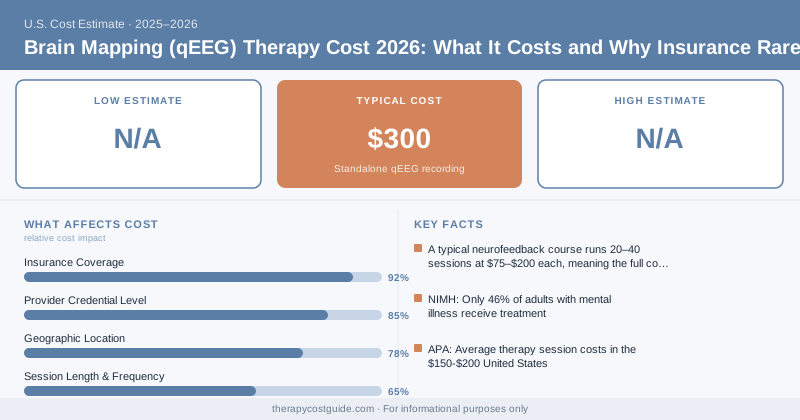
Brain Mapping (qEEG) Therapy Cost 2026: What It Costs and Why Insurance Rarely Pays
{ if eq .Lang "zh" }{ else }{ end }Is a $1,500 brain scan worth it if insurance won’t touch the bill? That’s the real question behind quantitative EEG (qEEG) brain mapping, a diagnostic tool that’s grown popular in integrative and functional psychiatry circles but still sits largely outside standard insurance coverage.
qEEG brain mapping records your brain’s electrical activity through a cap of scalp electrodes, then compares the resulting data against normative databases to flag patterns associated with attention difficulties, anxiety, depression, or trauma-related dysregulation. It’s FDA-cleared as an adjunctive diagnostic aid in specific contexts, but it remains outside mainstream psychiatric practice guidelines for routine diagnosis — which is the core reason insurance coverage is so spotty.
Brain Mapping Cost Breakdown
| Service | Typical Cost |
|---|---|
| Standalone qEEG recording | $300 – $700 |
| Full qEEG report with clinical interpretation | $500 – $1,500 |
| Complete evaluation package (qEEG + consultation + treatment plan) | $1,000 – $2,500 |
| Follow-up qEEG (progress comparison) | $300 – $600 |
| Neurofeedback session (after mapping, billed separately) | $75 – $200/session |
The wide range reflects real differences in what’s included — some clinics bundle a full clinical consultation and personalized treatment recommendations into the price, while others charge separately for the raw data collection and the interpretation.
Why Insurance Usually Says No
Most major insurers classify qEEG brain mapping for psychiatric purposes as investigational, meaning there isn’t yet enough large-scale, standardized clinical trial evidence for insurers to treat it as a routine, medically necessary diagnostic tool the way they treat a standard EEG for seizure evaluation. This is a coverage-policy distinction, not a statement that the technology has no clinical value — but it does mean most patients pay entirely out of pocket.
A minority of plans will cover a qEEG when it’s ordered as one component of a broader neuropsychological or neurological workup (for example, ruling out a seizure disorder), so it’s worth asking your prescriber whether your specific clinical situation could qualify for that framing.
Ask What Happens After the Map
A brain map alone doesn’t treat anything — it’s a diagnostic snapshot. Before paying for one, ask the provider exactly what happens next: will the results change your medication plan, direct you toward neurofeedback, or simply confirm something your existing symptoms already suggested? If a $1,500 evaluation won’t meaningfully change your treatment plan, that money may be better spent on additional therapy or medication management sessions.Neurofeedback: The Treatment That Usually Follows
Brain mapping is frequently paired with neurofeedback, a training-based treatment where you get real-time audio or visual feedback tied to your brainwave patterns, with the goal of gradually shifting them toward a healthier baseline over repeated sessions. A typical neurofeedback course runs 20–40 sessions at $75–$200 each, meaning the full combined cost of mapping plus a treatment course commonly reaches $3,000–$8,000 — a significant commitment with evidence that remains mixed and condition-specific in the broader research literature, particularly for ADHD.
NIMH continues to fund research into neuromodulation and biofeedback-adjacent approaches, but as of 2026 these remain complementary tools rather than replacements for established first-line treatments like therapy and medication for most psychiatric conditions.
Is It Worth the Cost?
For patients who’ve tried standard medication and therapy approaches covered in the antidepressant cost and therapy insurance coverage guides without adequate relief, some clinicians find qEEG-guided treatment planning genuinely useful for identifying which specific intervention to try next. For most patients starting treatment for the first time, it’s an expensive add-on rather than a necessary first step.
Bottom Line
Expect to pay $500–$2,500 out of pocket for brain mapping since insurance rarely covers it, plus $75–$200 per session if you move into neurofeedback afterward. Ask what specific decision the map will inform before paying for one — for many patients, that answer determines whether it’s worth the cost.
{ if eq .Lang "zh" }Disclaimer: TherapyCostGuide provides cost information for educational purposes only. We are not a mental health provider and do not offer clinical advice or treatment. Cost ranges are based on national survey data and vary significantly by location, provider credentials, practice setting, and insurance plan. Always consult a licensed mental health professional for treatment decisions. If you are in crisis, call or text 988 (Suicide & Crisis Lifeline) or go to your nearest emergency room.