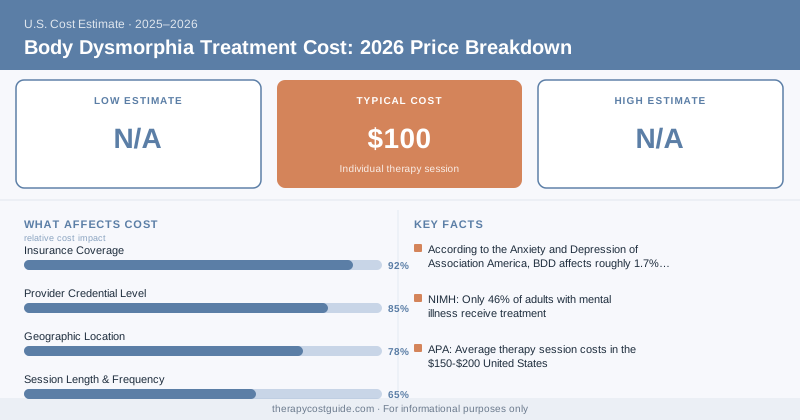
Body Dysmorphia Treatment Cost: 2026 Price Breakdown
{ if eq .Lang "zh" }{ else }{ end }Here’s a number that reframes the whole conversation about body dysmorphia: people with BDD often spend thousands on cosmetic procedures chasing a “fix” that never satisfies them — money that, redirected toward actual treatment, could resolve the underlying condition. Body dysmorphic disorder isn’t vanity. It’s a serious anxiety-spectrum condition, and the irony is that the cheapest path forward is usually the clinical one.
Let’s look at what real BDD treatment costs versus the trap of chasing procedures.
What Body Dysmorphia Treatment Costs
The frontline treatment is a specialized form of CBT, often paired with medication. Here’s the breakdown.
| Service | Typical Cost | Notes |
|---|---|---|
| Individual therapy session | $100 – $250 | CBT with exposure and response prevention |
| Full CBT course (16–22 sessions) | $2,000 – $4,500 | Before insurance |
| Psychiatry initial evaluation | $200 – $500 | Often high-dose SSRIs |
| Medication follow-up | $75 – $200 | Every 1–3 months |
| SSRI medication (generic) | $4 – $40/month |
A full course of evidence-based treatment typically lands in the low thousands — a fraction of what repeated cosmetic procedures cost, and far more effective.
Why CBT Is the Core Cost
BDD responds best to a specialized form of cognitive behavioral therapy that includes exposure and response prevention — the same family of techniques used for OCD. Sessions run $100–$250, and a typical course is 16 to 22 sessions, putting a full treatment at $2,000–$4,500.
According to the Anxiety and Depression Association of America, BDD affects roughly 1.7% to 2.4% of the general population, and it’s frequently underdiagnosed because people feel ashamed to describe their concerns. That shame is part of why so many people end up in dermatology or cosmetic surgery offices instead of a therapist’s chair.
Key Takeaway
Specialized CBT with exposure and response prevention — about $2,000–$4,500 for a full course — is the evidence-based treatment for BDD. It costs far less than repeated cosmetic procedures and actually addresses the root cause.The Expensive Detour Worth Avoiding
A defining feature of BDD is the pursuit of cosmetic procedures to correct perceived flaws — but research consistently shows these procedures rarely reduce BDD symptoms and often intensify them. People can spend tens of thousands chasing relief that treatment would provide for a fraction of the price.
Medication Costs
SSRIs are the standard medication for BDD, often at higher doses than for depression. That means psychiatry visits — an initial evaluation of $200–$500 plus follow-ups — and generic medication at $4–$40 a month. Because BDD overlaps heavily with anxiety and OCD, the same provider often treats both.
Insurance and Lower-Cost Options
BDD treatment is covered like other mental health care under most plans — see does insurance cover therapy. If you’re uninsured, exposure-focused specialists at training clinics offer reduced rates; our therapy without insurance guide covers the details.
Frequently Asked Questions
Will cosmetic procedures help my body dysmorphia? Almost never. Studies show cosmetic and dermatologic procedures typically fail to relieve BDD symptoms and frequently make them worse, since the underlying perception doesn’t change. The money is far better spent on specialized CBT, which targets the distorted thinking driving the distress.
How long does BDD treatment take? A typical course of specialized CBT runs 16 to 22 sessions over several months. Some people need a longer maintenance phase, and medication is often continued for a year or more. Severity and how long symptoms have been present both affect the timeline.
Is medication necessary for BDD? Not always, but it’s commonly recommended for moderate-to-severe cases, usually alongside therapy. SSRIs at higher doses have the strongest evidence. The combination of medication and CBT tends to outperform either one alone, so many clinicians recommend both.
{ if eq .Lang "zh" }Disclaimer: TherapyCostGuide provides cost information for educational purposes only. We are not a mental health provider and do not offer clinical advice or treatment. Cost ranges are based on national survey data and vary significantly by location, provider credentials, practice setting, and insurance plan. Always consult a licensed mental health professional for treatment decisions. If you are in crisis, call or text 988 (Suicide & Crisis Lifeline) or go to your nearest emergency room.