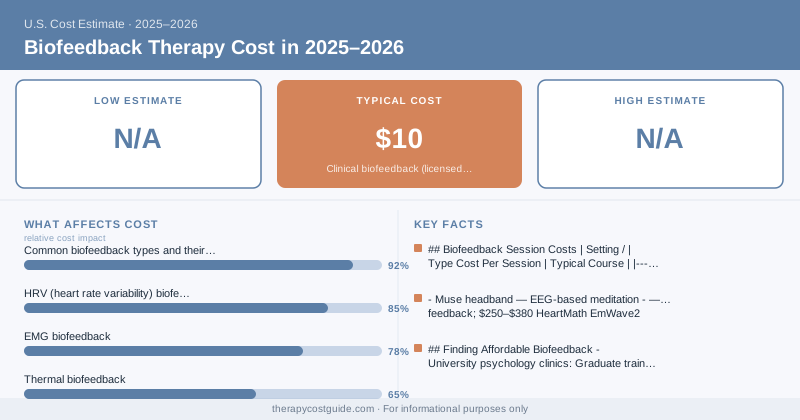
Biofeedback Therapy Cost in 2025–2026
{ if eq .Lang "zh" }{ else }{ end }A $3,500 quote for a full biofeedback course catches people off guard. They expected something close to regular therapy pricing — maybe a few hundred dollars total. But biofeedback isn’t a single skill-building conversation. It’s a technology-assisted training process that typically spans 10–20 sessions, and the specialized equipment drives costs well above what most people anticipate.
That said, the market for home devices has expanded considerably. You can now access meaningful HRV biofeedback training for under $350. Knowing which type of biofeedback you actually need — and for what condition — matters a great deal before you commit to a full clinical program.
Biofeedback Session Costs
| Setting / Type | Cost Per Session | Typical Course |
|---|---|---|
| Clinical biofeedback (licensed therapist) | $150 – $250 | 10–20 sessions |
| Neurofeedback / EEG biofeedback | $125 – $200 | 20–40 sessions |
| Hospital or medical center program | $100 – $175 | Varies by condition |
| University research clinic | $50 – $100 | Protocol-driven |
| Online/remote biofeedback session | $75 – $150 | 10–15 sessions |
At the high end — 40 neurofeedback sessions at $200 each — you’re looking at $8,000 out of pocket. Most standard biofeedback courses for anxiety or headaches run $1,500–$3,750 at typical private practice rates.
What Biofeedback Actually Does
Biofeedback uses sensors to monitor your body’s real-time physiological signals — heart rate, muscle tension, skin temperature, brain waves — and feeds that data back to you on a screen or through audio cues. The goal is learning to consciously influence functions that normally operate outside your awareness.
Common biofeedback types and their targets:
- HRV (heart rate variability) biofeedback — paced breathing to regulate the autonomic nervous system; strong evidence for anxiety and stress
- EMG biofeedback — muscle tension sensors; used for chronic muscle pain, tension headaches, and TMJ
- Thermal biofeedback — skin temperature monitoring; treats migraines and Raynaud’s syndrome
- Neurofeedback (EEG biofeedback) — brainwave training; used for ADHD, anxiety, PTSD, and sleep disorders
- Galvanic skin response (GSR) — sweat gland activity; often combined with relaxation training
The Association for Applied Psychophysiology and Biofeedback (AAPB) rates biofeedback as a Level 4 or Level 5 evidence-based treatment for tension-type headaches, migraine, hypertension, chronic pain, ADHD, and anxiety disorders — the highest evidence ratings AAPB assigns to any intervention.
Neurofeedback Costs: A Closer Look
Neurofeedback is the most expensive and most commonly sought type. It requires EEG sensors, specialized software, and a trained clinician to interpret brain map data.
| Neurofeedback Item | Typical Cost |
|---|---|
| Initial brain map (qEEG assessment) | $250 – $600 |
| Individual neurofeedback session | $125 – $200 |
| Full ADHD protocol (20–30 sessions) | $2,500 – $6,000 |
| Full anxiety or PTSD protocol (25–40 sessions) | $3,125 – $8,000 |
| Home neurofeedback rental (supervised) | $300 – $600/month |
The initial qEEG brain map — a 19-channel EEG that generates a baseline of your brainwave activity — is usually required before training begins. That’s an additional $250–$600 before your first session even starts.
Does Neurofeedback Work for ADHD?
The evidence is genuinely mixed, and it’s worth understanding the nuance. The AAPB and the International Society for Neuroregulation and Research (ISNR) rate neurofeedback as ’efficacious’ for ADHD — but several well-controlled 2020–2023 trials found that effects shrink significantly when blinded raters assess outcomes rather than parents. Neurofeedback likely helps some children and adults with ADHD, but it may not outperform a good medication regimen and costs far more. For those who can’t tolerate stimulant medications or prefer a non-pharmacological approach, it’s a reasonable clinical option — just go in with calibrated expectations.At-Home Biofeedback Devices
For HRV training, stress management, and basic anxiety reduction, consumer devices now offer meaningful biofeedback at a fraction of clinical costs.
- Muse headband — EEG-based meditation feedback; $250–$380
- HeartMath EmWave2 — HRV biofeedback, clinically validated; $200–$350
- BioStrap — wrist-based HRV and respiration tracking; $100–$150
- Inner Balance (HeartMath app + sensor) — $100–$130; pairs with your smartphone
NIMH-funded research on self-directed HRV biofeedback has shown meaningful reductions in anxiety and stress reactivity with consistent use — roughly 15–20 minutes daily over 4–8 weeks. Home devices work best for people who’ve already learned the basics in a clinical setting or who are targeting mild-to-moderate stress and anxiety rather than a diagnosed condition requiring structured treatment.
Insurance Coverage for Biofeedback
Coverage is inconsistent — which is the honest answer most people don’t want to hear, but need to know.
When insurance is more likely to cover biofeedback:
- Tension-type headaches and migraines: Many major insurers (Aetna, Cigna, UnitedHealthcare) have medical policies covering EMG biofeedback for headache — check your plan’s clinical policy bulletin specifically
- Urinary incontinence: Pelvic floor biofeedback is often covered under physical therapy benefits
- Chronic pain: Coverage varies; some plans cover it with a documented medical diagnosis and prior authorization
- Hypertension: Less consistent; occasionally covered as a behavioral medicine service
Where coverage is typically denied:
- Neurofeedback for ADHD (most commercial insurers classify it as experimental)
- Neurofeedback for PTSD or anxiety (similar exclusions apply)
- General stress management or performance enhancement use cases
If you have an FSA or HSA, biofeedback with a documented medical condition qualifies as an eligible expense. Keep your provider’s documentation noting the diagnosis.
Finding Affordable Biofeedback
- University psychology clinics: Graduate training programs often offer supervised biofeedback at $50–$100/session
- VA medical centers: Veterans can access biofeedback for PTSD and chronic pain at no cost through VA programs
- AAPB therapist directory: aapb.org/find-a-provider — filter by specialty and location
- Community mental health centers: Some offer biofeedback as part of integrated behavioral health services on a sliding-fee scale
If cost is the primary barrier and your target is anxiety or stress, starting with a HeartMath EmWave or similar HRV device is a reasonable entry point. For ADHD, chronic pain, or PTSD, clinical biofeedback with a certified provider is worth the investment — but shop around, compare qEEG assessment fees across providers, and ask about package pricing for multi-session courses.
Disclaimer: TherapyCostGuide provides cost information for educational purposes only. We are not a mental health provider and do not offer clinical advice or treatment. Cost ranges are based on national survey data and vary significantly by location, provider credentials, practice setting, and insurance plan. Always consult a licensed mental health professional for treatment decisions. If you are in crisis, call or text 988 (Suicide & Crisis Lifeline) or go to your nearest emergency room.