BetterHelp Cost 2025–2026: Plans, What's Included, and Is It Worth It?
{ if eq .Lang "zh" }{ else }{ end }BetterHelp became the most recognized name in online therapy by making a simple promise: unlimited access to a licensed therapist, for a monthly fee that works out to less than most in-person sessions.
The promise is mostly accurate. But “mostly” matters. Here’s what BetterHelp actually costs in 2025, what you get, and when it’s the right choice vs. when you should look elsewhere.
What BetterHelp Costs
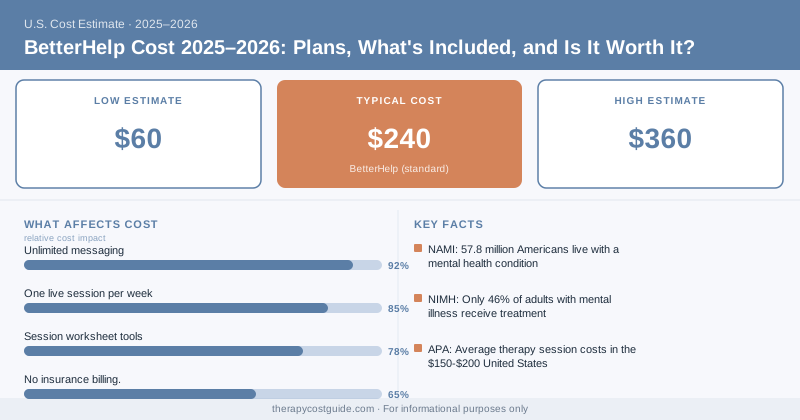
BetterHelp uses a subscription model. As of 2025, pricing falls in the range of $60–$100 per week, billed monthly — working out to approximately $240–$400 per month depending on your location and the plan tier you’re assigned.
You don’t choose a specific weekly rate when you sign up. BetterHelp’s pricing varies based on location, therapist availability in your area, and sometimes demand. Most users land in the $65–$90/week range.
| Plan Structure | Monthly Cost | Weekly Equivalent |
|---|---|---|
| BetterHelp (standard) | $240 – $360/month | $60 – $90/week |
| BetterHelp (higher demand markets) | $360 – $400/month | $90 – $100/week |
| In-person individual therapy (for comparison) | $400 – $800/month | $100 – $200/session |
| Couples via BetterHelp (ReGain) | $280 – $400/month | $70 – $100/week |
What’s Included in the Monthly Fee
Your BetterHelp subscription includes:
- Unlimited messaging with your therapist via the platform’s text, voice, and video message system
- One live session per week via video, phone, or live chat (45–50 minutes)
- Session worksheet tools and journaling features
- Ability to switch therapists at no extra charge if the match isn’t working
Unlimited messaging sounds better than it is in practice. Therapists typically respond once or twice per day on business days — it’s asynchronous, not a continuous chat conversation. The format works well for processing between sessions; it’s not a crisis response tool.
Financial Aid
BetterHelp offers financial assistance to clients who qualify. The application is in the sign-up flow — you’ll answer questions about household income, whether you’re a veteran, whether you’re a student, and other factors. Discounts range from 10–40% based on your situation.
This reduces the cost meaningfully. A 40% discount on a $320/month plan brings it to $192/month — competitive with some community mental health sliding scale rates.
BetterHelp vs. One In-Person Session Per Week
At $320/month, BetterHelp costs roughly the same as two in-person sessions with a $160/session therapist. But you also get unlimited messaging (asynchronous) and can switch therapists easily.
The trade-off: in-person sessions with a consistent relationship tend to produce better outcomes for complex presentations. BetterHelp is most cost-efficient for people who genuinely benefit from the between-session messaging and don’t need specialized modalities (EMDR, full DBT, etc.).
BetterHelp’s Limitations
No insurance billing. BetterHelp doesn’t work with insurance — period. Some plans offer out-of-network reimbursement; you’d need to request a superbill and submit it yourself. Don’t assume you’ll get reimbursed; call your insurer first to check your OON mental health benefits.
No prescriptions. BetterHelp therapists are licensed counselors, social workers, psychologists, and therapists — not prescribers. If you need psychiatric medication, you’ll need a separate prescriber.
Variable therapist quality. BetterHelp has tens of thousands of therapists on the platform. Quality varies enormously. Reading therapist profiles carefully and being willing to switch if the match isn’t working is important.
Not appropriate for acute crises. BetterHelp’s intake terms explicitly exclude clients with active psychosis, current suicidal ideation with plan, or acute substance dependency requiring detox. These presentations need higher-acuity care.
Who BetterHelp Works Best For
- Adults with mild-to-moderate anxiety or depression who haven’t tried therapy before
- People in areas with limited in-person therapist availability
- People who travel frequently or have irregular schedules that make consistent appointments difficult
- Those who genuinely benefit from asynchronous text support between sessions
- Anyone whose first priority is accessibility and lower cost over a specialized modality
Disclaimer: TherapyCostGuide provides cost information for educational purposes only. We are not a mental health provider and do not offer clinical advice or treatment. Cost ranges are based on national survey data and vary significantly by location, provider credentials, practice setting, and insurance plan. Always consult a licensed mental health professional for treatment decisions. If you are in crisis, call or text 988 (Suicide & Crisis Lifeline) or go to your nearest emergency room.