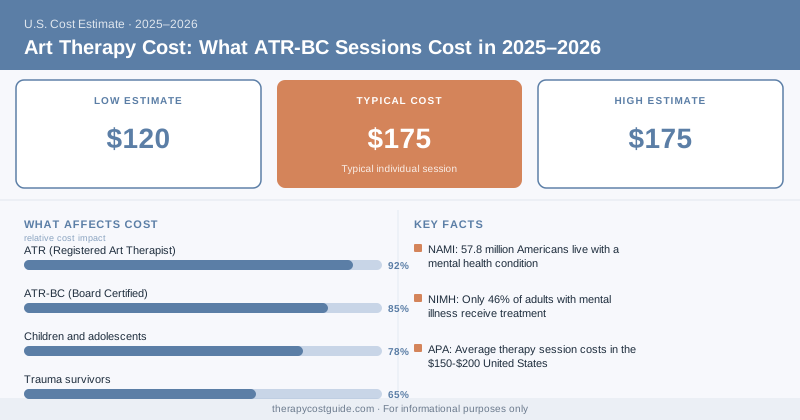
Art Therapy Cost 2026: $75–$200 per Session (Individual vs. Group)
{ if eq .Lang "zh" }{ else }{ end }In 2010, art therapy cost $60–$120 per session with a certified therapist in private practice. Today it’s $100–$200 — and the demand has outpaced the supply of credentialed practitioners significantly. Here’s where the money goes, who it’s actually for, and what “board certified” really means.
Art Therapy Costs in 2026
| Setting | Cost Per Session | Notes |
|---|---|---|
| Private practice ATR-BC (individual) | $100 – $200 | 50–60 min, materials often included |
| Group art therapy (clinic or community) | $40 – $80 per person | Groups typically 6–10 participants |
| Hospital or inpatient program | Often included in daily rate | Adjunct to primary psychiatric treatment |
| School-based art therapy | Often free | District-funded, limited access |
| Community mental health center | $20 – $80 | Sliding-scale, income-based |
| Typical individual private practice | $120 – $175 | Most U.S. markets |
Materials — paints, clay, paper, collage supplies — are almost always included in the session fee, which is part of why art therapy costs slightly more than standard talk therapy at comparable credential levels.
What the ATR-BC Credential Actually Means
The Art Therapy Credentials Board (ATCB) issues two levels of credential:
ATR (Registered Art Therapist): Completed a master’s program in art therapy plus 1,000 supervised clinical hours. Eligible for independent practice in many states.
ATR-BC (Board Certified): All ATR requirements, plus passing the ATCB national examination. This is the standard credential for private practice.
Some states have enacted licensed art therapist status — New York (LCAT), Maryland (LAT-licensed art therapist), and a handful of others. State licensure typically creates cleaner insurance billing pathways.
Why does credentialing matter for your wallet? Because only credentialed practitioners who also hold a clinical license can reliably bill insurance. An ATR-BC who is also a licensed clinical social worker (LCSW) can bill your insurer. An ATR-BC without a separate clinical license typically cannot — regardless of how qualified they are as an art therapist.
Many ATR-BCs hold dual credentials precisely for this reason. When calling to schedule, ask: “Do you hold a clinical mental health license in addition to your ATR-BC?”
Who Benefits Most from Art Therapy?
Art therapy’s research base is strongest for specific populations:
Children and adolescents with trauma: The nonverbal, symbolic nature of art therapy is particularly valuable for children who can’t verbalize what happened. Published studies in the Art Therapy journal document significant PTSD symptom reductions in children receiving art therapy following abuse and natural disasters.
Adults with dementia: Research published in the Gerontologist and multiple gerontology journals consistently shows improvements in mood, engagement, and quality of life in dementia patients receiving art therapy — one of the field’s most robust evidence bases.
Trauma survivors: Art offers a processing route that doesn’t require verbal narrative of the traumatic event, which can be retraumatizing for some survivors. Creating imagery gives the nervous system a different engagement point.
Autism spectrum disorder: Art therapy is used as a developmental and communication-building intervention with ASD populations, with a growing body of positive outcomes research.
Oncology and medical patients: Pediatric hospitals, cancer centers, and rehabilitation programs integrate art therapy to reduce anxiety, build coping, and address grief related to illness. Often free to patients as part of the care program.
Art Therapy Is Not Art Class
An art class develops skills and offers enjoyment. Art therapy is a clinical process. A trained ATR-BC notices what clients create, how they create it, what they avoid or return to, and uses those observations to guide therapeutic work — often without the client having to verbalize anything directly. This is especially valuable for children, people with limited verbal processing ability, and trauma survivors for whom talking directly about their experience doesn’t work. The art isn’t decorative; it’s diagnostic and therapeutic.Individual vs. Group Art Therapy
Individual art therapy ($100–$200/session) offers full therapeutic attention, flexibility to work at the client’s pace, and confidentiality. It’s appropriate for complex trauma, sensitive material, or when the client isn’t ready for group dynamics.
Group art therapy ($40–$80/person) adds peer relationships and universality — seeing that others struggle with similar things. Groups run 6–10 participants, led by an ATR-BC. Significantly more affordable, and for many presentations (adjustment difficulties, grief, general anxiety) equally or more effective than individual work. Groups in community mental health or hospital settings are often far cheaper than private-practice groups.
Insurance Coverage for Art Therapy
NAMI notes that coverage gaps for expressive therapies remain a significant barrier, particularly for children and adolescents in underserved communities. Here’s the realistic picture:
- State with art therapy licensure + ATR-BC holds clinical license: Best chance of insurance billing
- ATR-BC holds dual credential (e.g., also LCSW): Can bill under clinical license, coverage same as any outpatient therapy
- ATR-BC only, no clinical license, no state licensure: Insurance generally won’t pay regardless of how good the therapist is
If coverage matters for your budget, verify your therapist’s exact credentials before scheduling: “Do you bill insurance, and what licenses do you hold?”
Finding Affordable Art Therapy
The American Art Therapy Association (AATA) estimates roughly 5,000–6,000 credentialed art therapists practice in the U.S. — a small field concentrated in cities and near art therapy graduate programs. Access is genuinely limited in rural areas.
- AATA therapist locator: arttherapy.org — filter by specialty and location
- University training clinics: Art therapy graduate students supervised by ATR-BC faculty offer services at significantly reduced rates
- Hospital programs: Oncology, pediatric, and psychiatric programs at major hospitals often include art therapy at no additional charge
- Community mental health centers: Some employ ATR-BC therapists, especially in areas with nearby graduate programs
- Group art therapy: The most affordable private-sector option at $40–$80/session per person
Disclaimer: TherapyCostGuide provides cost information for educational purposes only. We are not a mental health provider and do not offer clinical advice or treatment. Cost ranges are based on national survey data and vary significantly by location, provider credentials, practice setting, and insurance plan. Always consult a licensed mental health professional for treatment decisions. If you are in crisis, call or text 988 (Suicide & Crisis Lifeline) or go to your nearest emergency room.