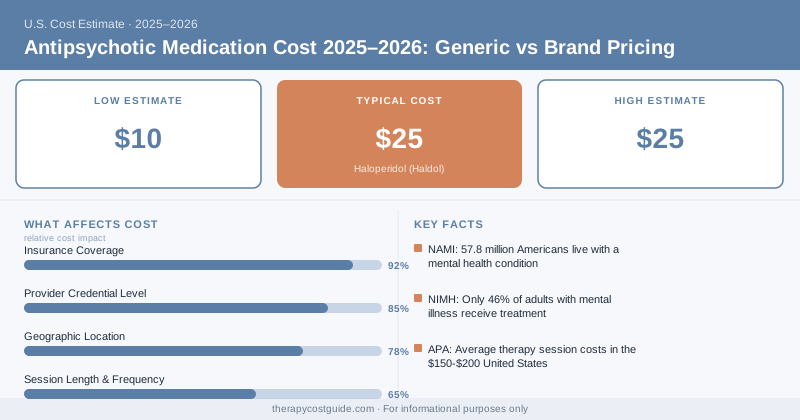
Antipsychotic Medication Cost 2025–2026: Generic vs Brand Pricing
{ if eq .Lang "zh" }{ else }{ end }Brand Abilify costs over $800/month. The generic aripiprazole — the exact same molecule — costs about $25. That $775 gap isn’t a fluke; it’s how pharmaceutical pricing works when a blockbuster drug is just past its patent expiration. Abilify was the best-selling drug in the U.S. by revenue in 2013 and 2014. The generic finally arrived in 2015.
Here’s the full antipsychotic cost picture in 2025.
First-Generation (Typical) Antipsychotics
First-generation antipsychotics have been generic for decades. They’re highly effective and very cheap. They also carry a higher risk of extrapyramidal side effects (tardive dyskinesia, akathisia) than newer agents, which is why they’ve largely been replaced by second-generation options for most conditions.
| Medication | Generic Cost/Month | Brand | Notes |
|---|---|---|---|
| Haloperidol (Haldol) | $10–$25 | Haldol | First-gen, high EPS risk |
| Chlorpromazine (Thorazine) | $15–$30 | Thorazine | First-gen, sedating |
| Perphenazine (Trilafon) | $20–$40 | Trilafon | First-gen, moderate EPS |
| Fluphenazine | $15–$30 | — | Long-acting injectable available |
| Thioridazine | $20–$40 | Mellaril | Black box warning for QT prolongation |
Second-Generation (Atypical) Antipsychotics
Second-generation antipsychotics are generally better tolerated and are first-line for most indications including schizophrenia, bipolar disorder, and treatment-resistant depression. Most are now generic, which has dramatically reduced costs.
| Medication | Generic/Month | Brand | Brand/Month |
|---|---|---|---|
| Aripiprazole | $25–$50 | Abilify | $800–$950 |
| Quetiapine | $20–$50 | Seroquel | $700–$900 |
| Olanzapine | $20–$50 | Zyprexa | $600–$800 |
| Risperidone | $15–$40 | Risperdal | $400–$600 |
| Ziprasidone | $40–$80 | Geodon | $500–$700 |
| Lurasidone | $50–$90 | Latuda | $1,200–$1,500 |
| Paliperidone | $60–$120 | Invega | $1,500–$2,000+ |
| Clozapine | $60–$120 | Clozaril | $350–$500 |
| Brexpiprazole | N/A yet | Rexulti | $700–$900 |
| Cariprazine | N/A yet | Vraylar | $1,000–$1,300 |
Note: Lurasidone (Latuda) and paliperidone (Invega) generics are available but costs vary widely. Clozapine is special — it requires REMS registry enrollment and weekly or biweekly blood monitoring due to agranulocytosis risk.
Abilify: The $800 vs. $25 Story
Aripiprazole (Abilify) is the most striking example of brand-to-generic price collapse in antipsychotics. The brand Abilify at $800–$950/month is almost never medically necessary — the generic has identical efficacy and safety. If you’re currently paying for brand Abilify and don’t have strong insurance coverage, ask your prescriber about the generic explicitly.
The brand is still marketed aggressively and sometimes prescribed by habit. The generic is therapeutically equivalent.
Injectable Long-Acting Antipsychotics
For patients with adherence challenges, long-acting injectable (LAI) formulations can eliminate the daily pill-taking requirement. These are given every 2–4 weeks (or monthly).
| Injectable | Frequency | Cost Per Injection (Cash) |
|---|---|---|
| Haloperidol decanoate | Monthly | $80–$150 |
| Fluphenazine decanoate | Every 2 weeks | $40–$80 |
| Risperdal Consta (risperidone) | Every 2 weeks | $1,200–$1,800 |
| Invega Sustenna (paliperidone) | Monthly | $2,000–$3,500 |
| Abilify Maintena (aripiprazole) | Monthly | $1,200–$1,800 |
First-generation injectables are extremely cheap. Atypical injectables are extremely expensive. With insurance coverage, out-of-pocket costs are typically much lower.
Antipsychotics for Augmentation
A significant portion of antipsychotic prescriptions aren’t for schizophrenia or bipolar disorder. Aripiprazole, quetiapine, and brexpiprazole are widely used as adjunctive (“add-on”) treatment for depression that hasn’t fully responded to antidepressants alone. This is a legitimate, evidence-based use — NIMH data supports augmentation strategies for treatment-resistant depression.
For depression augmentation, lower doses are used (e.g., aripiprazole 2–5mg vs. 15–30mg for schizophrenia). The cost is the same but the monitoring requirements are less intensive.
Insurance Coverage
Most second-generation antipsychotics are covered by insurance, though Tier placement varies. Generic versions are typically Tier 2 ($15–$45 copay). Newer agents without generics (Vraylar, Rexulti) often require prior authorization and may have high copays even with coverage.
Manufacturer patient assistance programs exist for expensive brand-name antipsychotics. Latuda, Vraylar, and Rexulti all have manufacturer savings programs that can reduce costs to $0–$30/month for qualifying patients. These programs typically require commercial (non-Medicare) insurance.
Antipsychotic Cost Summary
Generic second-generation antipsychotics (aripiprazole, quetiapine, olanzapine, risperidone): $20–$80/month. Brand versions: $400–$2,000/month with no clinical advantage over generics. Always ask about generic availability. Check manufacturer patient assistance programs if a non-generic medication is clinically necessary.Bottom Line
The antipsychotic market has a wide split between cheap, effective generics ($20–$80/month) and expensive brand-name drugs ($700–$2,000/month) with minimal clinical difference. For most indications, generic aripiprazole, quetiapine, olanzapine, or risperidone will be first-line and affordable. Brand-only agents like Vraylar and Rexulti are sometimes used for treatment-resistant cases — check manufacturer savings programs if you’re in that situation.
{ if eq .Lang "zh" }Disclaimer: TherapyCostGuide provides cost information for educational purposes only. We are not a mental health provider and do not offer clinical advice or treatment. Cost ranges are based on national survey data and vary significantly by location, provider credentials, practice setting, and insurance plan. Always consult a licensed mental health professional for treatment decisions. If you are in crisis, call or text 988 (Suicide & Crisis Lifeline) or go to your nearest emergency room.