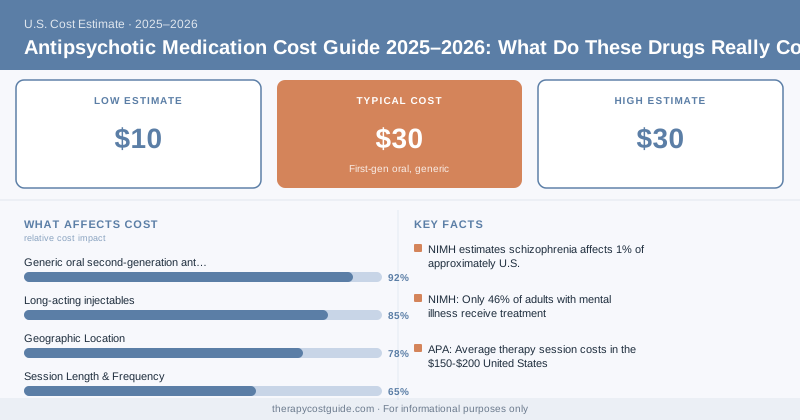
Antipsychotic Medication Cost Guide 2025–2026: What Do These Drugs Really Cost?
{ if eq .Lang "zh" }{ else }{ end }What does antipsychotic medication actually cost? The honest answer depends entirely on which generation and formulation you’re asking about — the range runs from $15 a month to over $2,000, and almost nobody explains why the gap is that wide.
Here’s the full breakdown by category.
Antipsychotic Costs by Type
| Category | Examples | Monthly Cost |
|---|---|---|
| First-gen oral, generic | Haloperidol, chlorpromazine | $10 – $30 |
| Second-gen oral, generic | Risperidone, olanzapine, quetiapine, aripiprazole | $15 – $70 |
| Second-gen oral, brand (still patented) | Newer agents like lumateperone, cariprazine | $900 – $1,400 |
| Long-acting injectable (LAI), older | Haloperidol decanoate, fluphenazine decanoate | $150 – $400/month |
| Long-acting injectable (LAI), newer | Paliperidone palmitate (1-month, 3-month), aripiprazole lauroxil | $1,200 – $2,200/month |
| Clozapine (treatment-resistant) | Clozapine + required monitoring | $50 – $150 + $100–$300 lab monitoring |
Why Does the Range Span 100x?
Generic oral second-generation antipsychotics — the workhorse category for schizophrenia, bipolar disorder, and treatment-resistant depression augmentation — have been generic for years and are genuinely cheap: $15–$70 a month.
Long-acting injectables cost far more because of the delivery technology and the fact that they’re administered in a clinic, not picked up at a pharmacy counter. But the cost-benefit case is real: NAMI and multiple clinical studies link LAIs to significantly lower relapse and rehospitalization rates in schizophrenia compared to daily oral medication, largely because they remove the adherence problem entirely — you can’t accidentally skip an injection the way you can skip a pill.
When an Injectable Is Worth the Higher Price
A single psychiatric hospitalization for a relapse can cost $10,000–$30,000. If daily pill adherence has been a repeated problem — missed doses leading to relapse — a $1,200–$2,200/month injectable that prevents even one hospitalization a year is often the more cost-effective choice over a full year, not the more expensive one. This is a conversation worth having directly with your psychiatric prescriber.Clozapine: The Special Case
Clozapine is the most effective antipsychotic for treatment-resistant schizophrenia, and the drug itself is cheap as a generic ($50–$150/month). But it requires mandatory, ongoing blood monitoring (weekly at first, tapering to monthly) to watch for a rare but serious drop in white blood cell count — adding $100–$300/month in lab costs, especially in the first six months.
Insurance Coverage
Antipsychotics are covered by essentially all insurance plans, including Medicaid, which covers a large share of schizophrenia and severe bipolar disorder treatment nationally. Long-acting injectables increasingly have dedicated prior authorization pathways because payers have data showing they reduce total cost of care by preventing hospitalizations — so approval, while it takes paperwork, is usually attainable with documented history of adherence issues.
NIMH estimates schizophrenia affects approximately 1% of U.S. adults, and NAMI data shows a majority of people with the condition experience at least one hospitalization in their lifetime without consistent treatment — which underscores why medication continuity, even at higher upfront cost, tends to save money over time.
Bottom Line
Generic oral antipsychotics are affordable at $15–$70/month. The real cost jump comes with brand-name pills or long-acting injectables, which can run into the thousands monthly — but often prevent far more expensive hospitalizations. Talk to your prescriber about which formulation fits both your clinical needs and your budget realistically.
{ if eq .Lang "zh" }Disclaimer: TherapyCostGuide provides cost information for educational purposes only. We are not a mental health provider and do not offer clinical advice or treatment. Cost ranges are based on national survey data and vary significantly by location, provider credentials, practice setting, and insurance plan. Always consult a licensed mental health professional for treatment decisions. If you are in crisis, call or text 988 (Suicide & Crisis Lifeline) or go to your nearest emergency room.