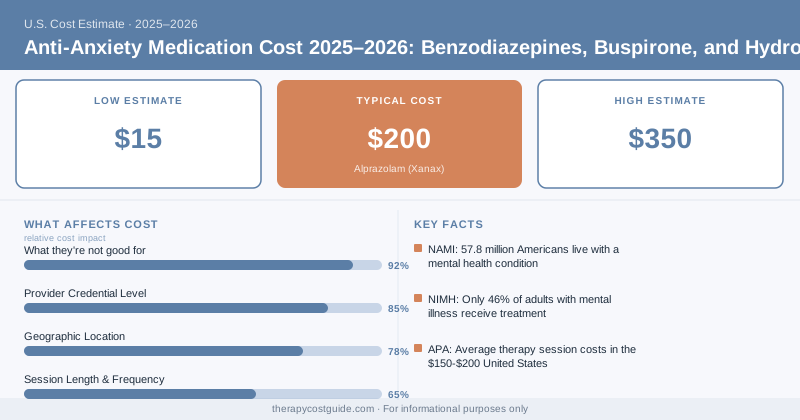
Anti-Anxiety Medication Cost 2025–2026: Benzodiazepines, Buspirone, and Hydroxyzine
{ if eq .Lang "zh" }{ else }{ end }Most patients assume the most-prescribed anxiety medication is also the safest. That’s not quite how it works. The benzodiazepine class — Xanax, Valium, Klonopin, Ativan — is one of the most effective and one of the most dangerous categories in psychiatry, and the cost picture reflects both the availability and the controversy.
Here’s what anti-anxiety medications actually cost in 2025, and the dependence context that should inform the conversation with your prescriber.
Anti-Anxiety Medication Costs at a Glance
| Medication | Type | Generic Cost/Month | Brand Cost/Month |
|---|---|---|---|
| Alprazolam (Xanax) | Benzodiazepine | $15–$40 | $200–$350 |
| Clonazepam (Klonopin) | Benzodiazepine | $15–$30 | $200–$300 |
| Lorazepam (Ativan) | Benzodiazepine | $15–$30 | $200–$280 |
| Diazepam (Valium) | Benzodiazepine | $15–$30 | $200–$280 |
| Buspirone | Non-benzo anxiolytic | $5–$20 | N/A (generic only) |
| Hydroxyzine | Antihistamine anxiolytic | $10–$25 | $150–$200 |
| Pregabalin (Lyrica) | Gabapentinoid | $30–$60 | $350–$500 |
| Gabapentin (off-label) | Gabapentinoid | $10–$20 | N/A |
Prices are cash retail, 30-day supply at common doses. Use GoodRx or pharmacy discount programs to reduce costs further — many of these generics are available for under $10/month at discount pharmacies.
Benzodiazepines: What They Cost and What They Risk
Benzodiazepines work fast. Within 30–60 minutes of taking alprazolam (Xanax), most people feel significantly calmer. That’s why they’re effective — and why they’re risky.
The mechanism involves enhancing GABA, the brain’s primary inhibitory neurotransmitter. This produces sedation, muscle relaxation, and rapid anxiety relief. The problem: the brain adapts. Over weeks to months of regular use, it reduces natural GABA production, creating dependence. Stopping abruptly can cause seizures — one of the few drug withdrawal syndromes that can be fatal.
According to the FDA, benzodiazepine prescriptions in the U.S. peaked at roughly 135 million per year before declining somewhat following new boxed warning requirements. Despite the risks, they remain appropriate for short-term, situational use — procedural anxiety, acute panic episodes, short-term adjustment disorders — under careful medical supervision.
What they’re not good for: Chronic daily anxiety management. For ongoing anxiety disorders (GAD, social anxiety, panic disorder), guidelines from the APA and NIMH strongly favor SSRIs/SNRIs plus psychotherapy as the first-line approach.
Buspirone: The Underrated Option
Buspirone is cheap, non-addictive, and doesn’t get nearly enough attention. At $5–$20/month generic, it’s a serotonin partial agonist that reduces anxiety without the sedation or dependence risk of benzodiazepines.
The catch: it takes 2–4 weeks to work. It’s not a PRN (as-needed) medication — it’s a daily medication that builds up. For patients who want a pill they can take during a panic attack, buspirone won’t do that job.
But for chronic generalized anxiety treated daily, buspirone has a solid evidence base, minimal side effects compared to SSRIs in many patients, no dependence risk, and costs almost nothing. It’s often underutilized because it doesn’t have the quick-relief appeal of benzodiazepines.
Hydroxyzine: The Antihistamine That Treats Anxiety
Hydroxyzine (Vistaril, Atarax) was originally an antihistamine. It also has significant anxiolytic properties — it works on histamine receptors and has mild effects on serotonin. It’s not addictive, not a controlled substance, and can be used on an as-needed basis for situational anxiety.
It does cause drowsiness in many people. At typical anxiety doses (25–50mg), that sedation is often mild. At higher doses, it becomes more pronounced. This makes it a reasonable option for anxiety that’s also disrupting sleep.
Cost: $10–$25/month generic. Telehealth platforms can prescribe it freely since it’s not a controlled substance.
Choosing Between Options
Anti-Anxiety Medication Decision Guide
For chronic daily anxiety (GAD): SSRIs or SNRIs are first-line. Add buspirone if response is partial. Benzodiazepines are a last resort for refractory cases.
For situational, as-needed anxiety relief: Hydroxyzine (non-addictive, less risky) or benzodiazepines (faster acting but with dependence risk) under close medical supervision.
For panic disorder: SSRIs first-line. Benzodiazepines may be used short-term during SSRI titration.
For social anxiety: SSRIs or SNRIs plus therapy. Beta-blockers (propranolol) are sometimes used off-label for performance anxiety at very low cost ($5–$15/month).
Insurance Coverage
Generic benzodiazepines, buspirone, and hydroxyzine are almost universally covered by insurance. They’re typically Tier 1 or Tier 2 medications with $5–$15 copays. Pregabalin (Lyrica) may require prior authorization and is considerably more expensive even with insurance ($50–$150/month with coverage, $350–$500 without).
Bottom Line
Anti-anxiety medications range from $5 to over $400/month depending on the drug and whether you use insurance. Buspirone ($5–$20/month) and hydroxyzine ($10–$25/month) are non-controlled, accessible via telehealth, and genuinely effective for appropriate patients. Benzodiazepines are inexpensive as generics but come with dependence risk and regulatory constraints that limit their usefulness for chronic anxiety. Your prescriber should discuss all options — not just reach for the fastest-acting one.
{ if eq .Lang "zh" }Disclaimer: TherapyCostGuide provides cost information for educational purposes only. We are not a mental health provider and do not offer clinical advice or treatment. Cost ranges are based on national survey data and vary significantly by location, provider credentials, practice setting, and insurance plan. Always consult a licensed mental health professional for treatment decisions. If you are in crisis, call or text 988 (Suicide & Crisis Lifeline) or go to your nearest emergency room.