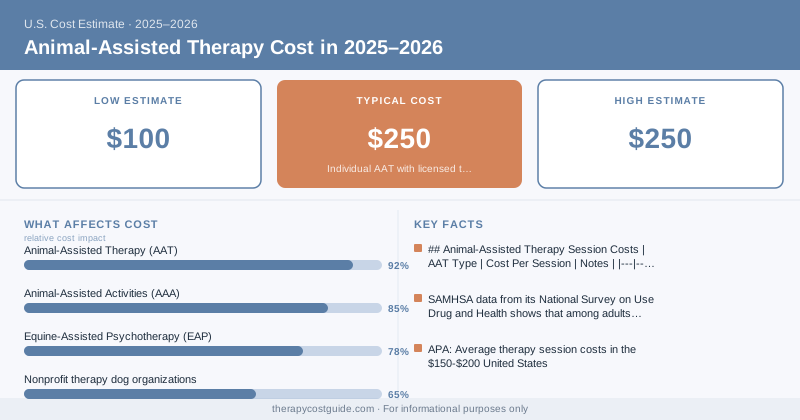
Animal-Assisted Therapy Cost in 2025–2026
{ if eq .Lang "zh" }{ else }{ end }42% of U.S. adults own a dog. Most can tell you firsthand that animals reduce stress — but that intuition is now backed by a growing body of clinical evidence. APA’s Society of Counseling Psychology documents that animal-assisted therapy (AAT) produces measurable reductions in anxiety, depression, and PTSD symptoms across multiple populations. What most people don’t realize is how wide the cost range is: from completely free through nonprofit programs to over $10,000 for residential treatment with an equine component.
Understanding what you’re actually paying for — and what “animal-assisted therapy” really means clinically — helps you find the right access point without overpaying.
Animal-Assisted Therapy Session Costs
| AAT Type | Cost Per Session | Notes |
|---|---|---|
| Individual AAT with licensed therapist | $100 – $250/hour | Most common clinical format |
| Equine-assisted therapy (horses) | $50 – $150/session | Specialized centers, 45–60 min |
| AAT group session (facility-based) | $30 – $75/person | Schools, hospitals, group homes |
| Certified therapy dog visit (nonprofit) | Often free | Volunteer-based programs |
| AAT for veterans (VA-affiliated) | $0 – copay only | Many VA facilities offer this |
| Online coaching with animal focus | $50 – $100/session | Not clinical AAT; wellness only |
The cost spread here is real and it’s driven by one factor: you’re paying for the licensed clinician’s time, not the animal. Equine programs cost more because they layer in facility overhead, horse care, and specialized handlers on top of the therapist’s hourly rate. A therapy dog visiting your hospital room costs nothing because volunteers absorb that time.
What Makes It Therapy (Not Just an Animal Visit)
This distinction matters both for what you get out of it and how insurance might treat it.
Animal-Assisted Therapy (AAT) is led by a credentialed mental health professional who integrates the animal purposefully into treatment planning. The animal’s presence is structured around clinical goals: reducing trauma activation, building attachment skills, developing emotional regulation. The sessions are documented, goal-directed, and progress-tracked.
Animal-Assisted Activities (AAA) are casual interactions with trained animals in hospitals, schools, or care facilities. Valuable. Not the same as treatment.
Equine-Assisted Psychotherapy (EAP) is a specific modality where the horse’s responses mirror the client’s emotional state. It’s typically co-facilitated by a licensed therapist and a certified equine specialist. Horses are uniquely sensitive to human emotional cues — that reactivity is the therapeutic tool.
The APA has documented growing evidence that AAT reduces anxiety and depression scores, with notable outcomes in populations with PTSD, autism spectrum disorder, and dementia. Most studies note small sample sizes and call for continued research, but clinical adoption has accelerated significantly since 2020.
Equine Therapy: A Closer Look at Costs
Equine-assisted therapy typically runs through residential programs or specialized ranches rather than traditional therapy offices. Costs vary depending on whether it’s outpatient or part of a larger treatment program.
| Equine Program Format | Typical Cost |
|---|---|
| Single outpatient session | $75 – $150 |
| 8-session outpatient course | $600 – $1,200 |
| Intensive weekend workshop | $500 – $1,500 |
| Residential program with equine component | $3,000 – $10,000+/month |
| PATH International member program (nonprofit) | $50 – $100/session |
PATH International (Professional Association of Therapeutic Horsemanship) maintains a directory of accredited programs at pathintl.org. These programs pair certified therapeutic riding instructors or equine specialists with licensed mental health professionals — look for that dual-credential structure when evaluating a program.
Veterans and Animal-Assisted Therapy
Veterans with PTSD have particularly strong access to AAT at low or no cost. The Department of Veterans Affairs has expanded equine therapy, therapy dog, and other human-animal interaction programs at numerous VA Medical Centers nationwide. Organizations like American Humane’s ‘Pups4Patriots’ program and ‘Canines for Warriors’ place trained service dogs with veterans — a different intervention from AAT, but often deeply impactful for PTSD symptom management. If you’re a veteran, check with your VA primary care team or mental health clinic before paying out of pocket. Veterans in crisis can reach the Veterans Crisis Line by calling or texting 988 and pressing 1.Free and Low-Cost AAT Options
A lot of AAT access doesn’t involve a private practice bill at all.
Nonprofit therapy dog organizations — Pet Partners (petpartners.org) and Alliance of Therapy Dogs coordinate volunteers who bring certified therapy dogs to schools, hospitals, libraries, and disaster relief sites at no charge. These aren’t individual psychotherapy sessions, but they provide genuine mental health benefit — especially for acute stress and grief.
Hospital and inpatient programs — if you’re receiving inpatient psychiatric care, many facilities now include AAT as part of the treatment program at no additional cost to you.
School-based programs — therapy dog programs in K–12 schools have grown rapidly since 2020, particularly for children with anxiety and trauma history. Ask your school counselor whether the district has a program or a referral connection.
SAMHSA data from its National Survey on Drug Use and Health shows that among adults with serious mental illness, only about 47% receive any mental health treatment in a given year — with cost as one of the most commonly cited barriers. AAT’s sliding-scale and free-access options make it one of the more equitable pathways into care for people who’ve been priced out of traditional therapy.
Insurance Coverage for AAT
Here’s the honest picture: insurance won’t reimburse “animal-assisted therapy” as a standalone line item. What insurance may cover is the licensed therapist’s session — if the therapist bills it as standard outpatient psychotherapy under CPT codes 90834 or 90837, and the animal-assisted approach is simply their clinical method.
Your coverage depends entirely on whether the provider accepts your insurance and whether they bill as a licensed outpatient mental health session. The animal’s presence doesn’t change the billing code.
Equine therapy at a standalone facility typically bills privately. Most commercial insurers don’t reimburse it. Some Medicaid managed care plans in specific states have begun covering equine therapy for children — worth a direct call to your plan to check your state’s specific policies.
If you have an HSA or FSA, sessions with a licensed therapist who practices AAT are generally an eligible expense. Get documentation from the provider showing the session was a licensed mental health service.
Finding AAT Providers
- Pet Partners therapist directory: petpartners.org
- EAGALA provider search: eagala.org/find — Equine Assisted Growth and Learning Association
- PATH International: pathintl.org — accredited equine therapy centers nationwide
- Psychology Today: filter by specialty “Animal-Assisted Therapy” in the therapist finder
- Community mental health centers: some integrate therapy animal programs into sliding-scale services
Ask any AAT provider three direct questions before committing: Is the therapist licensed in my state? Is the animal certified through a recognized organization (Pet Partners, Alliance of Therapy Dogs)? What specific clinical goals would guide our work together? Those three questions quickly separate evidence-grounded treatment from a pleasant dog visit with a wellness label attached.
Disclaimer: TherapyCostGuide provides cost information for educational purposes only. We are not a mental health provider and do not offer clinical advice or treatment. Cost ranges are based on national survey data and vary significantly by location, provider credentials, practice setting, and insurance plan. Always consult a licensed mental health professional for treatment decisions. If you are in crisis, call or text 988 (Suicide & Crisis Lifeline) or go to your nearest emergency room.