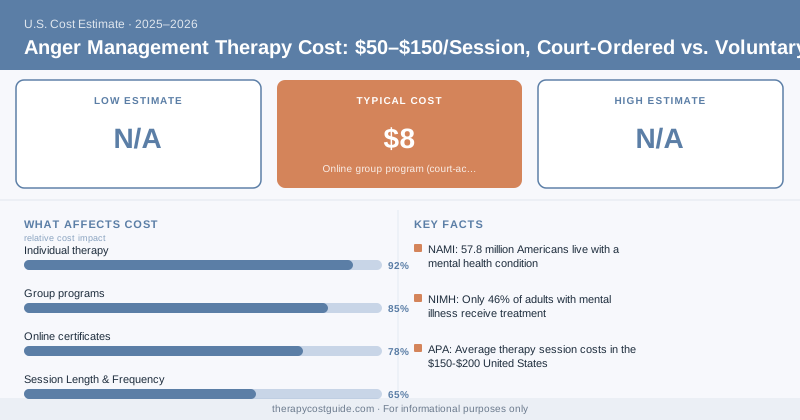
Anger Management Therapy Cost: $50–$150/Session, Court-Ordered vs. Voluntary
{ if eq .Lang "zh" }{ else }{ end }Court says you need anger management. The question is how much it’s going to cost — and whether the cheapest online certificate will satisfy the requirement. Spoiler: sometimes yes, sometimes no. Here’s exactly what anger management costs, what courts actually accept, and whether your insurance will pay for any of it.
Anger Management Cost Overview
| Format | Cost Per Session | Typical Program Length | Total Cost |
|---|---|---|---|
| Individual therapy | $80 – $150 | 12 – 26 sessions | $960 – $3,900 |
| Group therapy (in-person) | $25 – $75 | 8 – 26 weeks | $200 – $1,950 |
| Online group program (court-accepted) | $15 – $40 | 8 – 52 sessions | $120 – $2,080 |
| Court-approved in-person program | $50 – $100 | 12 – 52 weeks | $600 – $5,200 |
| Online certificate course (self-paced) | $30 – $150 total | 4 – 12 hours | $30 – $150 |
Court-Ordered vs. Voluntary Anger Management
The requirements differ significantly depending on why you’re attending.
Court-ordered anger management: The judge or probation officer specifies the number of sessions, the format, and often the specific program. You cannot substitute a cheap online certificate for a court-specified in-person program without court approval. Courts typically require:
- A licensed provider delivering the program
- Attendance records submitted to the court/probation officer
- Completion certificate from an approved provider
- Some courts require specific curricula (Duluth Model for domestic violence cases)
Always verify program approval with your attorney or probation officer before enrolling. An unapproved program that costs $30 is worthless if the court doesn’t accept it.
Voluntary anger management: If you’re choosing to address anger patterns on your own initiative — through therapy, personal growth, or family pressure — you have complete flexibility. Individual therapy, group programs, or online courses are all appropriate.
What Drives the Cost Difference
Individual therapy: Working one-on-one with a licensed therapist (LCSW, LPC, psychologist) addressing the underlying drivers of anger — often trauma, anxiety, or depression. Most effective for complex presentations but most expensive.
Group programs: Structured psychoeducational groups run by a licensed facilitator. Typically 8–26 weekly sessions. Less expensive because one facilitator serves 6–12 participants simultaneously. Evidence-based for many presentations; may not be sufficient for severe anger with underlying mental health conditions.
Online certificates: Self-paced courses that cover anger management concepts. Lowest cost but limited therapeutic value for genuine anger problems. Courts accept these in some jurisdictions for minor offenses; check your court’s requirements.
Does Insurance Cover Anger Management?
This depends entirely on how it’s billed.
Covered: If your therapist is treating an underlying mental health diagnosis (Intermittent Explosive Disorder ICD-10 F63.81, or Adjustment Disorder, or PTSD that includes anger as a symptom), sessions are billed to insurance using the diagnosis and standard therapy CPT codes. Your standard copay applies.
Not covered: Court-approved “anger management programs” run by non-licensed providers, online certificates, and psychoeducational groups that aren’t part of licensed clinical treatment typically can’t be billed to insurance.
The workaround: If you need court-ordered anger management AND want insurance to contribute, find a licensed therapist who specifically treats anger and can document an appropriate diagnosis. The therapy addresses the anger management requirement; the insurance pays as mental health treatment.
How Many Sessions Do You Actually Need?
Research on anger management shows that 8-session programs produce measurable improvements in anger frequency and intensity. Longer programs (16–26 sessions) produce better sustained outcomes, particularly for anger that involves physical aggression.
Courts typically require 26–52 sessions for domestic violence-related offenses. For non-domestic anger issues, 12–16 sessions is standard. For self-referred individuals, 8–12 sessions of individual or group therapy is a reasonable starting point — then reassess.
The APA recognizes Cognitive Behavioral Therapy (CBT) as the most evidence-supported approach for anger problems, particularly CBT-based anger management programs like those developed by Raymond Novaco.
Court-Ordered Programs: What to Expect
If you’re court-ordered to complete anger management, the program will typically:
- Intake assessment: Evaluates your anger patterns, history, and risk level. Usually included in program cost.
- Structured curriculum: Topics typically cover triggers identification, physiological awareness, de-escalation techniques, communication skills, and relapse prevention.
- Weekly attendance: Missing sessions typically requires make-up sessions (additional cost, $50–$100/session).
- Progress reports: Programs often submit regular progress reports to courts or probation. Confirm whether report fees are included.
- Completion certificate: Submitted to court/attorney upon successful completion.
Domestic violence-related cases: These often require the Batterers Intervention Program (BIP) rather than standard anger management. BIPs are typically longer (26–52 weeks), more expensive ($50–$100/session), and must be delivered by programs certified by your state’s domestic violence organization.
Finding Low-Cost Anger Management
Community mental health centers: Many offer anger management groups at sliding-scale fees, from $5–$30/session based on income.
County-funded programs: Some counties fund court-approved anger management for income-eligible defendants. Ask your public defender or probation officer.
University training clinics: Graduate psychology programs sometimes offer anger management groups at reduced rates under licensed supervision. Cliniciantracker.com and your local university’s psychology department website can help locate these.
Disclaimer: TherapyCostGuide provides cost information for educational purposes only. We are not a mental health provider and do not offer clinical advice or treatment. Cost ranges are based on national survey data and vary significantly by location, provider credentials, practice setting, and insurance plan. Always consult a licensed mental health professional for treatment decisions. If you are in crisis, call or text 988 (Suicide & Crisis Lifeline) or go to your nearest emergency room.