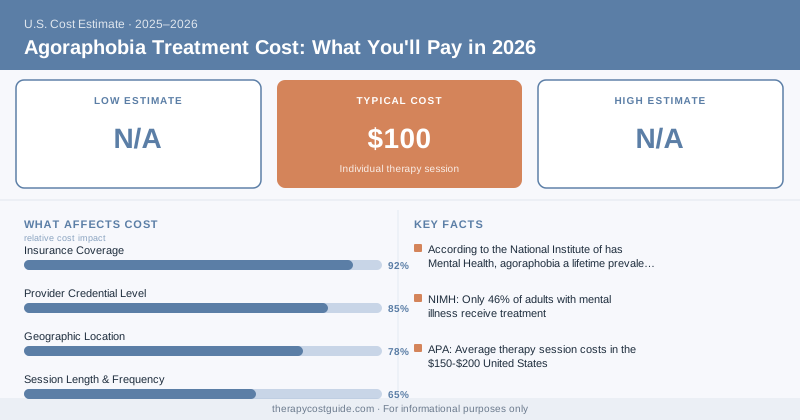
Agoraphobia Treatment Cost: What You'll Pay in 2026
{ if eq .Lang "zh" }{ else }{ end }Most people picture agoraphobia as “fear of leaving the house.” That’s only part of it. At its core it’s a fear of being somewhere you can’t easily escape or get help if panic hits — a crowded store, a bridge, public transit, a long line. And here’s the cruel irony for cost: the people who most need treatment are often the ones who find it hardest to physically get to an appointment.
That single fact shapes everything about what agoraphobia treatment costs and how you access it.
What Agoraphobia Treatment Costs
The backbone of agoraphobia treatment is therapy, usually exposure-based. Medication often plays a supporting role. Here’s what to expect.
| Service | Typical Cost | Notes |
|---|---|---|
| Individual therapy session | $100 – $250 | CBT or exposure therapy |
| Full exposure therapy course (12–20 sessions) | $1,600 – $4,000 | Before insurance |
| Psychiatry initial evaluation | $200 – $500 | |
| Medication follow-up visit | $75 – $200 | Every 1–3 months |
| SSRI/SNRI medication (generic) | $4 – $40/month | |
| Telehealth therapy session | $80 – $200 | Often the most accessible option |
Because leaving home is the symptom, telehealth is genuinely a game-changer here — and it’s frequently cheaper than in-person care.
Why Exposure Therapy Is the Core Cost
The most effective treatment is gradual, structured exposure — facing feared situations step by step. A therapist guides you through a hierarchy, starting small. Exposure therapy sessions run $100–$250 each, and a typical course is 12 to 20 sessions.
According to the National Institute of Mental Health, agoraphobia has a lifetime prevalence of roughly 1.3% among U.S. adults, and it carries one of the higher “serious impairment” rates of the anxiety disorders. That severity is exactly why a full structured course — rather than a few scattered sessions — is usually needed.
Key Takeaway
Exposure-based CBT is the gold standard, costing roughly $1,600–$4,000 for a full course before insurance. Starting with telehealth removes the very barrier — leaving home — that makes in-person treatment hard.Telehealth: The Accessibility Discount
For agoraphobia specifically, virtual therapy isn’t a compromise — it’s often the smart first move. Sessions run $80–$200, and many therapists will design hybrid plans: early sessions online, later exposure exercises in person as you build capacity. Because agoraphobia frequently overlaps with panic and broader anxiety, the same provider can usually treat both.
Medication Costs
SSRIs and SNRIs are the usual prescriptions, and generics run $4–$40 a month. You’ll also need medication management visits — an initial evaluation of $200–$500, then periodic follow-ups. Some psychiatrists offer the entire process by video, which matters a lot here.
Cutting the Cost
Insurance usually covers therapy and psychiatry for agoraphobia — check our guide on whether insurance covers therapy for the details. If you’re paying out of pocket, telehealth platforms and sliding-scale clinics are your friend; our therapy without insurance guide covers the cheapest legitimate routes.
Frequently Asked Questions
How many sessions does it take to treat agoraphobia? Most people see meaningful improvement within 12 to 20 exposure-based sessions, though severity matters. Mild cases sometimes resolve faster; long-standing, severe agoraphobia can take longer. The key is consistency — sporadic sessions tend to stall progress.
Can agoraphobia be treated entirely online? Often, yes — especially in the early and middle stages. Therapists can guide imaginal and even real-world exposures remotely, coaching you through outings by phone or video. Many people transition to occasional in-person work later, but starting online removes the biggest barrier.
Is medication necessary? Not always. Many people improve with exposure therapy alone. But the Anxiety and Depression Association of America notes that combining medication with therapy can speed relief for moderate-to-severe cases. The decision is individual — discuss it with both a therapist and a prescriber.
{ if eq .Lang "zh" }Disclaimer: TherapyCostGuide provides cost information for educational purposes only. We are not a mental health provider and do not offer clinical advice or treatment. Cost ranges are based on national survey data and vary significantly by location, provider credentials, practice setting, and insurance plan. Always consult a licensed mental health professional for treatment decisions. If you are in crisis, call or text 988 (Suicide & Crisis Lifeline) or go to your nearest emergency room.