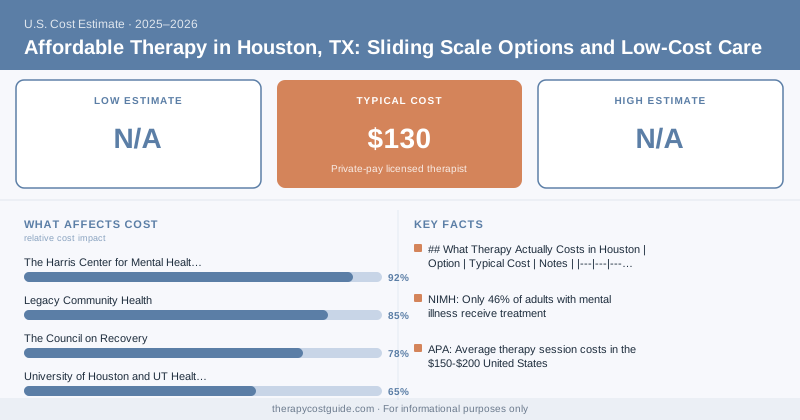
Affordable Therapy in Houston, TX: Sliding Scale Options and Low-Cost Care
{ if eq .Lang "zh" }{ else }{ end }Maria, a 29-year-old nurse in Houston’s Third Ward, called eleven therapists before she found one she could afford. Eight never called back. Two quoted $180 a session. The eleventh, a counselor at a Legacy Community Health clinic, charged her $25 based on her income. Her story isn’t unusual — it’s basically the Houston therapy market in miniature.
Houston has one of the country’s largest uninsured populations relative to its size, and Texas never expanded Medicaid under the ACA, which makes the gap between “therapy exists” and “therapy is affordable” wider here than in many states. The good news: Houston also has an unusually deep bench of low-cost options if you know where to look.
What Therapy Actually Costs in Houston
| Option | Typical Cost | Notes |
|---|---|---|
| Private-pay licensed therapist | $130 – $220/session | No income requirements, fastest access |
| Sliding-scale community clinic | $0 – $80/session | Legacy Community Health, Council on Recovery |
| The Harris Center (public MH authority) | $0 – $40/session | Income-based, serves uninsured Harris County residents |
| University training clinic (UH, UT Health) | $15 – $50/session | Supervised graduate students |
| Open Path Collective member therapist | $40 – $80/session | $65 one-time membership required |
| Texas Medicaid (STAR/STAR Kids) | $0 copay | Must be Medicaid-eligible |
SAMHSA’s National Survey on Drug Use and Health has consistently found that only about half of U.S. adults with a diagnosed mental illness actually receive treatment in a given year — and cost is the single most cited reason people give for going without care. Houston’s affordability gap makes that stat feel very local.
Where to Start Looking
The Harris Center for Mental Health and IDD is Harris County’s official public mental health authority. It’s the closest thing Houston has to a guaranteed safety net — anyone can call regardless of insurance status, and fees are assessed on a sliding scale tied to household income and size.
Legacy Community Health operates federally qualified health center (FQHC) locations across Houston with integrated behavioral health. FQHCs are required by federal law to offer sliding-scale fees, so no one is turned away for inability to pay.
The Council on Recovery focuses on substance use and co-occurring mental health treatment with income-based fees and a long track record in the Houston area.
University of Houston and UT Health Houston training clinics let advanced graduate students under licensed supervision see clients at a fraction of private-practice rates — often $15–$50/session.
Bring Proof of Income to Your First Call
Every sliding-scale clinic in Houston needs documentation before it can adjust your fee — usually a recent pay stub, a tax return, or a letter confirming unemployment benefits. Calling ahead and asking “what do I need to bring to qualify for sliding scale” saves you a wasted first appointment and gets your discounted rate applied immediately instead of retroactively.Texas Medicaid and Insurance
Texas Medicaid, delivered through STAR and STAR Kids managed care plans, covers outpatient counseling for eligible children, pregnant women, parents, and people with disabilities — but Texas’s income thresholds for adults without children are notably strict since the state didn’t expand Medicaid. If you’re not Medicaid-eligible and don’t have employer insurance, sliding-scale and FQHC options are usually your best route.
If you do have marketplace or employer insurance, the Mental Health Parity and Addiction Equity Act requires most plans to cover mental health at parity with medical care — meaning your therapy copay should match your specialist copay, not be inflated separately.
Don’t Overlook Nonprofits and Support Groups
Mental Health America of Greater Houston offers free screenings, referrals, and support groups alongside its counseling referral network. NAMI Greater Houston runs free peer support groups for people with mental illness and their families — not a replacement for therapy, but a genuinely useful supplement while you’re on a waitlist.
Bottom Line
Houston’s therapy market has a wide gap between $130–$220 private pay and $0–$80 sliding-scale care — but the sliding-scale options are real, numerous, and don’t require insurance. Start with The Harris Center or a Legacy Community Health clinic, bring income documentation, and don’t assume the first “no” from a private practice is your only option.
{ if eq .Lang "zh" }Disclaimer: TherapyCostGuide provides cost information for educational purposes only. We are not a mental health provider and do not offer clinical advice or treatment. Cost ranges are based on national survey data and vary significantly by location, provider credentials, practice setting, and insurance plan. Always consult a licensed mental health professional for treatment decisions. If you are in crisis, call or text 988 (Suicide & Crisis Lifeline) or go to your nearest emergency room.