Affordable Therapy in Dallas, TX: Low-Cost Options for 2026
{ if eq .Lang "zh" }{ else }{ end }What happens when a state doesn’t expand Medicaid and a city has a large uninsured population? Dallas is a real-world answer: a genuine gap between private-pay therapy rates and what a meaningful share of residents can actually afford, filled — imperfectly but substantially — by Metrocare Services and a handful of nonprofit and university options.
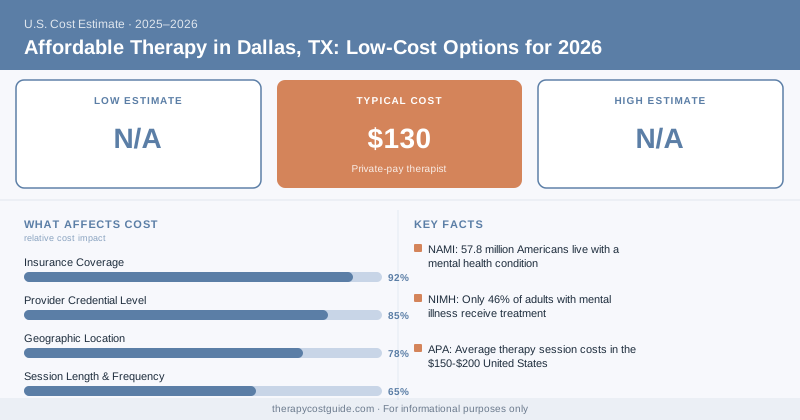
Dallas Therapy Cost by Option
| Option | Typical Cost | Notes |
|---|---|---|
| Private-pay therapist | $130 – $200/session | No income requirements |
| Metrocare Services (Dallas County MH authority) | $0 – $60/session | Income-based sliding scale |
| Federally Qualified Health Center (FQHC) | $0 – $50/session | Legally required sliding scale |
| University training clinic (SMU, UNT Dallas) | $20 – $50/session | Supervised graduate students |
| Texas Medicaid (STAR/STAR Kids) | $0 copay | Must be Medicaid-eligible |
| Open Path Collective member therapist | $40 – $80/session | $65 one-time membership |
Metrocare Services: Start Here First
Metrocare Services is Dallas County’s designated local mental health authority, meaning it’s specifically funded and structured to serve residents regardless of ability to pay, with fees adjusted on an income-based sliding scale. It’s the closest equivalent Dallas has to a guaranteed safety net, and it serves both adults and children across multiple clinic locations throughout the county.
Because Texas didn’t expand Medicaid under the ACA, a significant share of low-income adults without dependent children don’t qualify for Medicaid coverage at all — which makes Metrocare and similar sliding-scale options disproportionately important in Dallas compared to states with expanded Medicaid eligibility.
Ask Metrocare About Same-Day or Walk-In Crisis Options
If you’re in acute distress and can’t wait for a standard intake appointment, ask specifically whether Metrocare or a nearby FQHC offers same-day crisis assessment slots — many public mental health authorities reserve capacity for urgent walk-ins separate from their standard scheduling queue. This is worth asking about directly by phone rather than assuming you must wait for the next available routine appointment.FQHCs and University Clinics
Federally Qualified Health Centers across Dallas-Fort Worth are legally required to offer sliding-scale fees regardless of insurance status, and many integrate behavioral health directly into primary care visits. SMU and University of North Texas Dallas both operate training clinics where supervised graduate students provide therapy at reduced rates — a solid option if you’re comfortable with a trainee under close licensed supervision.
Texas Medicaid Coverage
Texas Medicaid, delivered through STAR and STAR Kids managed care plans, covers outpatient therapy for eligible children, pregnant women, parents, and people with disabilities. If you have marketplace or employer insurance instead, mental health parity protections should keep your copay in line with a standard medical specialist visit — worth verifying against your plan’s Explanation of Benefits.
Bottom Line
Dallas’s affordability gap is real, driven partly by Texas’s non-expansion of Medicaid — but Metrocare Services, area FQHCs, and university training clinics together provide a genuine low-cost path for residents who need it. Start with Metrocare if you’re uninsured, and don’t assume a private practice’s advertised “sliding scale” matches nonprofit rates without asking directly.
{ if eq .Lang "zh" }Disclaimer: TherapyCostGuide provides cost information for educational purposes only. We are not a mental health provider and do not offer clinical advice or treatment. Cost ranges are based on national survey data and vary significantly by location, provider credentials, practice setting, and insurance plan. Always consult a licensed mental health professional for treatment decisions. If you are in crisis, call or text 988 (Suicide & Crisis Lifeline) or go to your nearest emergency room.