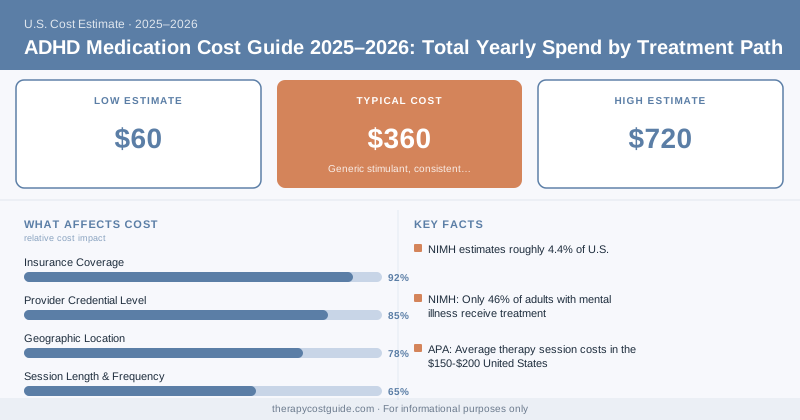
ADHD Medication Cost Guide 2025–2026: Total Yearly Spend by Treatment Path
{ if eq .Lang "zh" }{ else }{ end }Sarah’s insurance card says her ADHD medication copay is $15. Some months it’s $15. Other months, when her pharmacy is out of generic Adderall and she has to fill a brand-name bridge prescription, it’s $340. That gap — not the sticker price on any one bottle — is what actually blows up an ADHD medication budget.
This guide walks through total annual cost by treatment path, not just per-pill pricing, so you can plan for the real range instead of the best-case number.
Annual Cost by Treatment Path
| Treatment Path | Annual Cost (Insured) | Annual Cost (Uninsured, Cash) |
|---|---|---|
| Generic stimulant, consistent supply | $60 – $240 | $360 – $720 |
| Generic stimulant, occasional shortage bridge | $150 – $400 | $600 – $1,400 |
| Brand-name stimulant only | $600 – $2,400 | $3,600 – $4,800 |
| Non-stimulant (generic atomoxetine or guanfacine) | $60 – $180 | $360 – $720 |
| Combination (stimulant + non-stimulant) | $180 – $500 | $900 – $1,800 |
Ranges assume monthly prescriber follow-up isn’t included — see below for that add-on cost.
Why the Range Is So Wide
Three variables move the number more than anything else:
- Generic vs. brand. A generic stimulant runs $30–$90 a month cash. The exact same active ingredient as a brand can run $300–$450. There is rarely a clinical reason to pay the difference.
- Shortage-driven substitutions. Since the amphetamine salts shortage began, patients bounce between pharmacies and sometimes between drug classes. Every bounce risks a cash-price month.
- Insurance formulary tier. Some plans put extended-release formulations on a higher tier than immediate-release, adding $20–$60 to the copay for no clinical reason other than plan design.
Don’t Forget the Prescriber Visits
Medication cost is only part of the ADHD treatment budget. Stimulants are Schedule II, which means most states require an in-person visit at least once before ongoing telehealth refills, plus periodic follow-ups — typically $150–$350 per visit without insurance, or a $25–$50 copay with it. Budget 3–4 visits in year one, tapering to 1–2 in maintenance years.
Three Ways to Cut the Bill Without Cutting Care
- Ask for 90-day fills. Mail-order pharmacies often price a 90-day supply cheaper per-unit than three separate 30-day fills, and it insulates you from single-month shortage spikes.
- Compare cash price against your copay. GoodRx and manufacturer coupons sometimes beat the insurance copay for generics — check both before paying.
- Request “generic OK, no brand penalty” language on the prescription so your pharmacist automatically substitutes when your usual generic is out.
Non-Stimulants Change the Math
Non-stimulants like generic atomoxetine or guanfacine aren’t controlled substances, so they don’t carry the same shortage risk or in-person prescribing rules. NIMH estimates roughly 4.4% of U.S. adults meet criteria for ADHD — a population large enough that non-stimulant demand has grown steadily as patients look for more predictable supply. They typically cost less than brand stimulants and can be prescribed and refilled entirely via telehealth in most states.
Bottom Line
Budget $360–$1,200 a year if you’re insured and on a generic, and closer to $600–$1,800 if you’re paying cash. Brand-only regimens without insurance can easily hit $4,000+. The single biggest lever you control is insisting on generics and 90-day fills wherever your plan allows it.
{ if eq .Lang "zh" }Disclaimer: TherapyCostGuide provides cost information for educational purposes only. We are not a mental health provider and do not offer clinical advice or treatment. Cost ranges are based on national survey data and vary significantly by location, provider credentials, practice setting, and insurance plan. Always consult a licensed mental health professional for treatment decisions. If you are in crisis, call or text 988 (Suicide & Crisis Lifeline) or go to your nearest emergency room.